
Korean culture
Korean Honorifics: Speech Levels, 님, 씨 and the Rules Nobody Explains
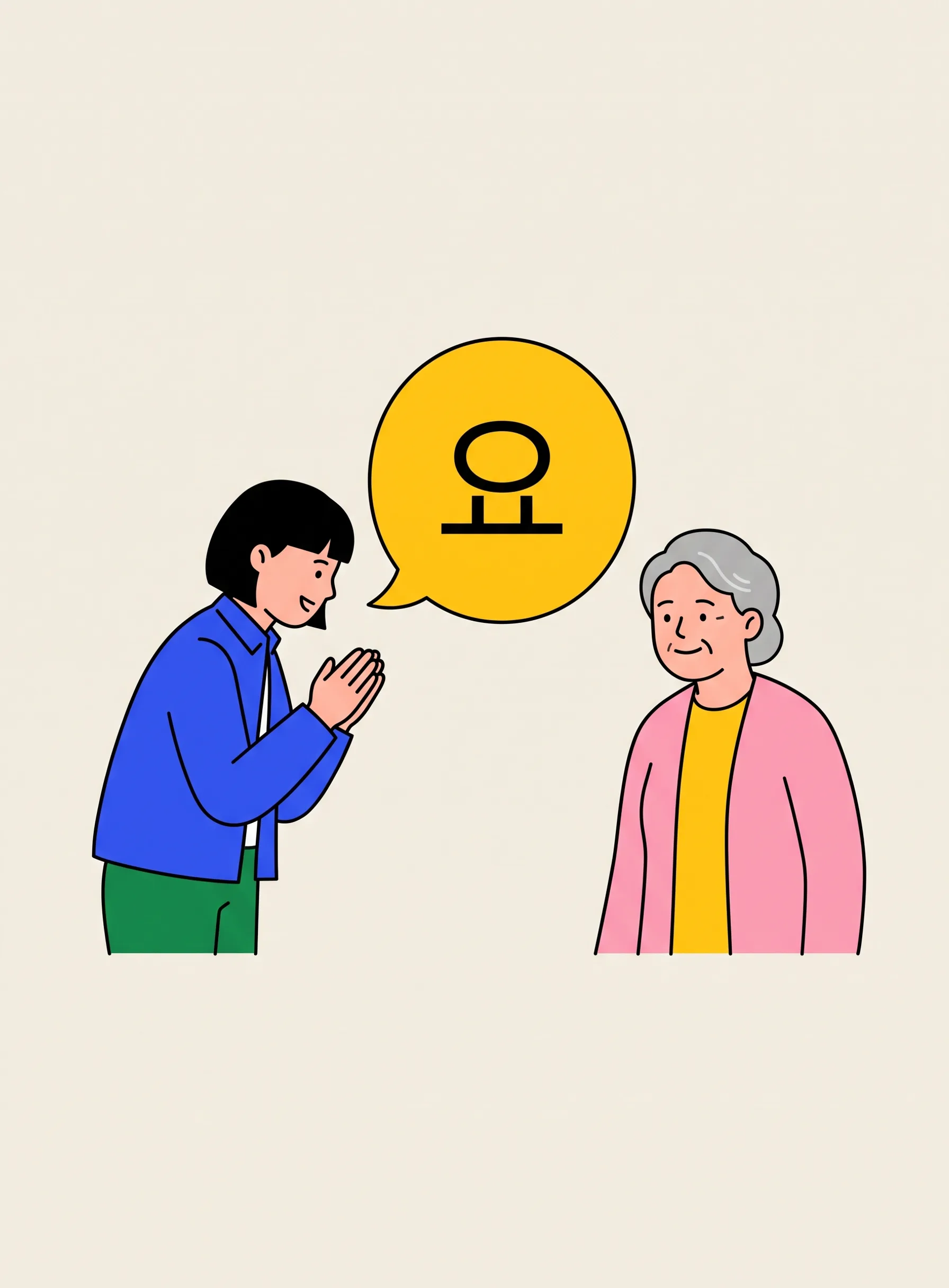
Most learners meet Korean honorifics as a single scary idea: Korean has ‘formal’ and ‘informal’, and getting it wrong is rude. That is true, and it is also the least useful way to think about it. Korean politeness is not one switch. It is three separate layers that run at the same time — the ending of the verb, the choice of verb, and the word you use for the person — and each layer answers a slightly different question.
Once you see the layers separately, the system stops being a wall of exceptions. This guide covers what Korean honorifics actually are, the three speech levels you will genuinely hear in modern Korea, the special honorific verbs and nouns, how 님 and 씨 work, how Koreans decide which level to use with whom, and the mistakes that mark a learner within one sentence.
What Korean honorifics actually are: three layers
When a Korean speaker adjusts for politeness, they are adjusting three things independently. Textbooks tend to mash them together, which is why so many learners come away confused.
- Layer 1 — the speech level. The ending on the verb, chosen for the listener. 가요, 갑니다 and 가 all mean ‘go’; the ending tells you how the speaker positions themselves toward the person they are talking to.
- Layer 2 — subject honorification. The infix -시- and a handful of special verbs, chosen for the person being talked about. 가세요 raises the person doing the going. If that person is your grandmother, you use it even when you are chatting to your little brother.
- Layer 3 — address and nouns. Titles like 님 and 씨, humble words like 저 instead of 나, and honorific nouns like 연세 instead of 나이. This is what you call people and their things.
The layers mix freely, and that is the whole trick. 할머니가 오셨어 (‘Grandma’s here’), said to a younger sibling, uses the casual ending for the listener and the honorific -시- for grandma. Neither choice cancels the other. A learner who thinks of ‘formal Korean’ as one package will either honour the sibling by mistake or forget to honour the grandmother.
A useful test when you are building a sentence: ask who am I talking to? (that picks the ending) and who am I talking about? (that decides whether -시- goes in). Two questions, two answers, and most of the grammar falls out of them.
The speech levels you will actually hear
Grammar books list seven speech levels. In everyday modern Korean you need three, and you will recognise a fourth from historical dramas.
- 합쇼체 — formal polite (-습니다 / -ㅂ니다). 감사합니다, 알겠습니다, 회의가 시작됩니다. News anchors, announcements, military speech, presentations, a job interview, the first sentence to a customer. It sounds crisp and slightly impersonal. Questions end in -습니까?
- 해요체 — standard polite (-요). 감사해요, 알겠어요, 어디 가요? This is the everyday default with anyone who is not a close friend or clearly younger: shop staff, colleagues, a stranger asking directions, your friend’s parents. If you learn only one level properly, learn this one.
- 반말 / 해체 — casual (no -요). 고마워, 알겠어, 어디 가? Close friends of the same age, younger siblings, children, and people who have explicitly agreed to drop formality. Used with the wrong person, it is the one mistake that genuinely offends.
- 하오체 and 하게체. 어디 가오? / 자네 왔는가? You will hear them from kings, old professors and villains in period dramas. You will not need to produce them.
In practice, the choice for a learner is almost always between -요 and no -요, with -습니다 reserved for moments that feel official. Working Koreans switch between 합쇼체 and 해요체 inside a single conversation: 네, 알겠습니다 to acknowledge an instruction, then 그런데 이건 어떻게 해요? a moment later. Mixing the two polite levels is normal. Dropping from either of them to 반말 is the jump that matters.
The lowest level also has a strict mirror: 해라체, the plain -다 form (간다, 먹는다), used in writing, diaries, headlines and to children. You will read it constantly and speak it rarely.

Honorific verbs, humble words and the -시- infix
The second layer raises the person you are talking about. Most of the time it is just -시- added to the verb stem: 가다 → 가시다, 읽다 → 읽으시다, 바쁘다 → 바쁘시다. In the polite present this surfaces as -세요: 선생님이 가세요, 사장님이 바쁘세요.
A small set of very common verbs do not take -시- but swap for a completely different word. These are the ones worth memorising, because they come up in every family conversation:
- 먹다 → 드시다 (eat). 할아버지, 식사하셨어요? or 많이 드세요 (‘enjoy your meal’). 잡수시다 is the even more respectful version for the very elderly.
- 자다 → 주무시다 (sleep). 안녕히 주무세요 is ‘good night’ to a parent.
- 있다 → 계시다 (be somewhere). 사장님 계세요? — ‘Is the boss in?’ But when 있다 means have, it becomes 있으시다: 시간 있으세요?
- 말하다 → 말씀하시다 (speak). 죽다 → 돌아가시다 (pass away).
Nouns follow along: 나이 → 연세 (age), 집 → 댁 (home), 이름 → 성함 (name), 밥 → 진지 (meal), 생일 → 생신 (birthday). And the particle 이/가 can become 께서 in careful speech: 할머니께서 오셨어요.
The other direction matters just as much: lowering yourself. Instead of 나 you say 저; instead of 우리 you say 저희. 주다 (give) becomes 드리다 when you give something to a superior, 묻다 (ask) becomes 여쭤보다, and 보다 (see, meet) becomes 뵙다 — which is why the standard first-meeting line is 처음 뵙겠습니다. Politeness in Korean is a seesaw: the other person goes up, you go down, and both movements are grammatical.
님, 씨 and why Koreans avoid saying ‘you’
The third layer is what you actually call a person, and it causes more real-world embarrassment than any verb ending.
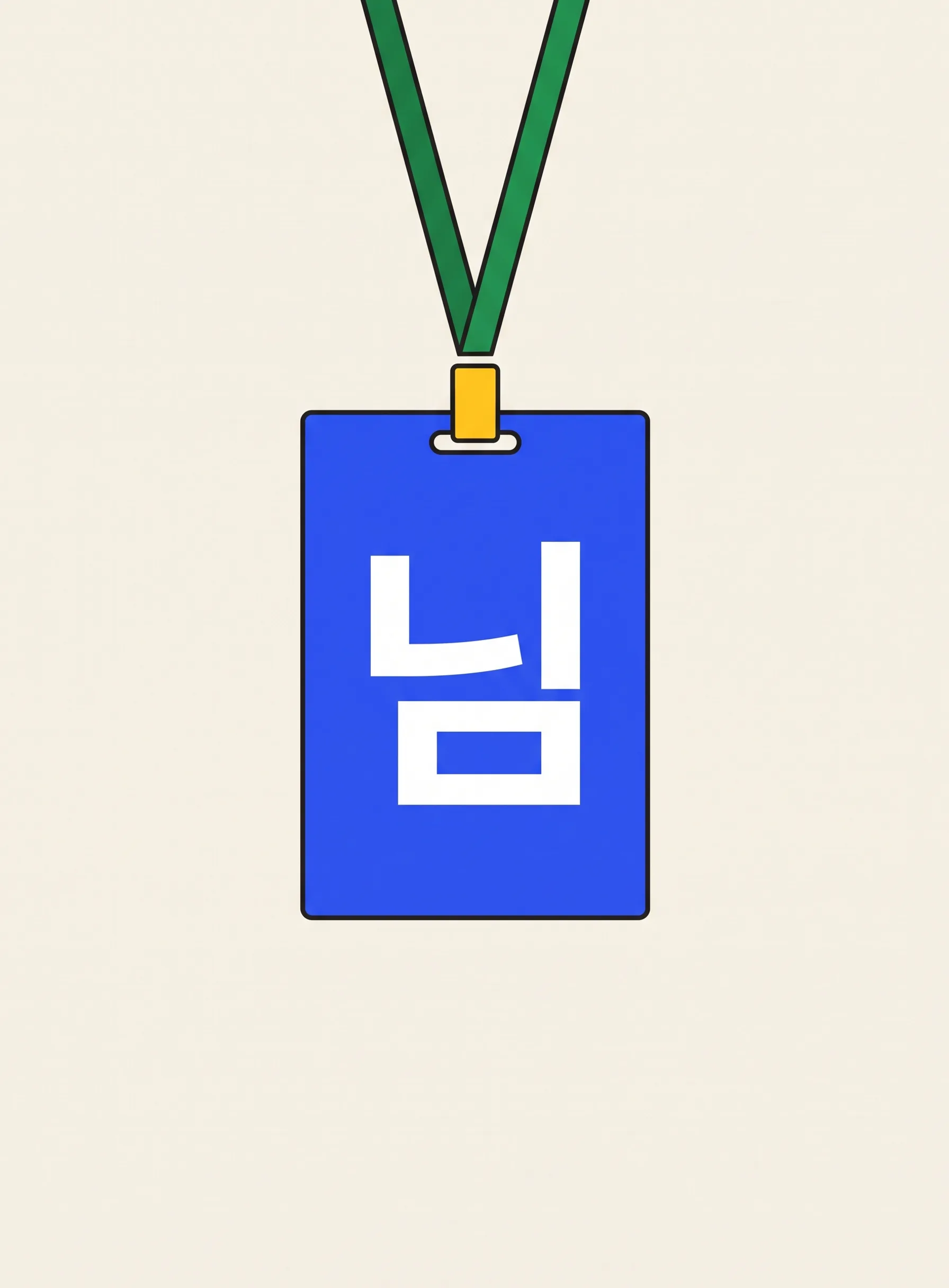
- 님 (nim) is the high honorific. It attaches to titles and roles: 선생님 (teacher), 사장님 (company boss, and by extension any shop owner), 부장님 (department head), 고객님 (customer), 기사님 (driver). Attached to a name, 민지 님, it is the polite neutral form used online and in many newer companies that deliberately flattened their title system.
- 씨 (ssi) goes after a name — ideally the full name or the given name, 김민지 씨 or 민지 씨 — and signals polite equality. It is correct between colleagues of similar rank and for someone junior. It is not correct for your boss, your teacher or anyone clearly older, where 씨 sounds as though you are pulling rank. Surname plus 씨 alone, 김 씨, sounds distant and slightly rough.
- Job title + 님 beats name + anything in most workplaces. Koreans often do not use a superior’s name at all.
This is the context for the most counter-intuitive rule for English speakers: Korean mostly avoids the word ‘you’. 당신 exists, and dictionaries will offer it, but in speech it is used between spouses, in song lyrics, and in arguments — 당신이 뭔데? is roughly ‘who do you think you are?’ 너 is only for friends and juniors. With everyone else, Koreans repeat the title (사장님은 어떻게 생각하세요? — ‘what does the boss think?’, said to the boss) or drop the subject entirely and let the -시- carry the meaning.
Family and age words do the same job in personal relationships — 언니, 오빠, 형, 누나 — while 선배 covers anyone who joined the same school or company before you.
How Koreans decide which level to use
Nobody consults a chart. The decision runs on three questions, asked in roughly this order.
- Is this an official situation? A presentation, a first meeting at work, customer service, a formal email. If yes, start with 합쇼체 and titles regardless of age.
- Is the other person older, or senior in the institution? If yes, use 해요체 at minimum, honorific -시- when talking about them, and a title rather than their name. Age is counted by birth year, so a gap of one year matters.
- Have we agreed to drop formality? This is the only route to 반말 with an adult you are not already close to, and it is an explicit moment. The older or more senior person usually offers: 말 편하게 해 or 말 놓자 (‘let’s speak comfortably’). The younger person may ask 말 놓아도 돼요? but only once there is some closeness.
Two consequences surprise learners. First, the arrangement is often asymmetric, and that is not rude: a manager speaks 반말 to a junior who answers in 해요체, a grandmother speaks casually to a grandchild who answers politely. Second, distance can be expressed by going up. Two old friends who have fallen out may switch back to 해요체 with each other, and it lands like a slammed door. Politeness level is not just respect; it is a measure of closeness.
For a learner, the safe default is simple: 해요체 with everyone, -시- for anyone older, titles instead of names at work, and wait to be invited into 반말. Nobody is offended by a foreigner who is slightly too polite. Plenty of people are put off by one who is too casual.
Mistakes learners make with Korean honorifics
These come up again and again, including from learners whose grammar is otherwise solid.
- Honouring yourself. 제가 가실게요 raises the speaker — a grammatical way of calling yourself important. -시- never goes on your own actions. It is 제가 갈게요.
- Using 당신 as a polite ‘you’. It reads as intimate or confrontational. Use the title, the name with 님 or 씨, or no pronoun at all.
- 씨 to a superior. 박 선생님, never 박 씨, for your teacher. With anyone senior, the title replaces the name.
- Dropping to 반말 because the other person did. An older person speaking casually to you is not an invitation to reply in kind. Wait for 말 놓자.
- Forgetting the humble 저. 나는 학생이에요 is grammatical but lopsided: polite ending, casual pronoun. 저는 학생이에요 matches.
- Asking an elder 이름이 뭐예요? Correct words, wrong layer. Name and age have their own honorific nouns: 성함이 어떻게 되세요? and 연세가 어떻게 되세요?
- Copying the service-industry -시-. Shop staff say 커피 나오셨습니다 — honouring the coffee. It is widely used and widely mocked as over-polite. Say 커피 나왔습니다.
- Treating honorifics as purely about respect. They also measure distance. Staying in 합쇼체 with a friend who has asked you to relax reads as cold, not polite.
How to actually practise Korean honorifics
The grammar of honorifics fits on two pages. What takes time is the reflex: hearing a person’s age or role and having the right ending already in your mouth. Koreans build that reflex over childhood; learners have to build it deliberately.
- Learn verbs in pairs. Do not learn 먹다 alone; learn 먹다 / 드시다, 자다 / 주무시다, 있다 / 계시다, 주다 / 드리다 as a unit. Pairs are what you need when the person changes.
- Practise one sentence at three levels. Take 어디 가? and say it three ways: 어디 가? to a friend, 어디 가요? to a colleague, 어디 가세요? to a teacher. Ten sentences a day this way builds more fluency than a chapter of rules.
- Listen for the switch in dramas. The moment two characters move from 해요체 to 반말 — or back — is always a plot point. Noticing it trains your ear for the levels faster than any drill.
- Use the title, not the name. Whenever you address a Korean older than you, reach for their role first. It removes half of the decisions.
Then use it with real people, because this is a social skill before it is a grammatical one. A textbook cannot tell you when a Korean speaker has quietly shifted from -습니다 to -요, or when they are about to say 말 놓자. CoffeeTalk pairs you with native Korean speakers for short conversations, and the speech level question comes up almost immediately — ask your partner which level they would use with you, and why, and you will get a better explanation than most grammar books. Picking topics like work, family or school makes the honorific verbs appear naturally.
For the polite phrases you will use first, Korean greetings and how to say thank you in Korean both follow the same three levels described here.

FAQ
What are Korean honorifics?
Korean honorifics are the grammar and vocabulary Korean uses to show respect and social distance. They work on three layers: the verb ending chosen for the listener (such as -습니다, -요 or casual speech), the honorific -시- and special verbs chosen for the person being talked about, and titles and nouns such as 님, 씨, 저 and 연세.
How many speech levels does Korean have?
Grammar books list seven, but modern everyday Korean uses three: formal polite -습니다, standard polite -요, and casual 반말. The -다 plain form is common in writing, and the older 하오체 and 하게체 survive mostly in historical dramas.
What is the difference between 님 and 씨?
님 is the higher honorific and attaches mainly to titles, as in 선생님 or 사장님, or to names in neutral online and workplace settings. 씨 goes after a person's name and signals polite equality. Use 씨 for colleagues of similar rank or juniors, never for a teacher, boss or clearly older person.
Is it rude to speak 반말 in Korean?
It is rude with anyone older, more senior or not yet close to you. Casual speech is normal between close friends of the same age, to younger siblings and children, and with adults who have explicitly offered to drop formality, usually by saying 말 놓자 or 말 편하게 해.
Can I say 당신 for 'you' in Korean?
It is best avoided. In speech 당신 is used between spouses, in lyrics, or in arguments, where it sounds confrontational. Koreans normally use the person's title or name with 님 or 씨, or leave the subject out of the sentence entirely.