
English speaking
How to Improve English Speaking: A 90-Day System That Shows Results

There is a point in most people’s English where effort stops converting into progress. The first two years were obvious: you learned the tenses, the vocabulary doubled, films got easier. Then somewhere around the intermediate plateau the returns flatten out. You still study. You still watch series in English, still save words, still do the app streak. And your speaking is roughly what it was eighteen months ago.
That plateau is not a sign that you have reached your ceiling. It is a sign that the thing you are practising and the thing you want to improve have quietly stopped being the same thing. This guide is about how to improve English speaking specifically — finding the bottleneck that is actually holding you back, converting the English you already own into English you can produce, and measuring the result so you can tell within weeks whether it is working. Ninety days is enough for a change you can hear.
Why studying more stopped making you better
Almost every intermediate learner has the same ratio problem. Add up an honest week: series, podcasts, reading, vocabulary apps, grammar exercises, and then the minutes in which English actually left your mouth. For most people the second number is under ten minutes, and quite often it is zero.
That ratio is not a character flaw. Input is comfortable, portable and feels productive. It is also the wrong tool for this job. Listening and reading build the English you recognise; only speaking builds the English you can reach for. These are separate systems, they grow at different rates, and past beginner level the gap between them widens on its own unless you deliberately close it.
Three specific things go wrong when input is the only practice:
- Your passive vocabulary outruns your active one, permanently. A word you have read forty times can still be unavailable when you need it, because you have never once retrieved it under time pressure. Recognition is a much easier task than production, and practising the easier task does not train the harder one.
- You get comfortable with your own errors. Speaking alone or writing without feedback lets the same mistakes set. Nobody corrects I have went there last year, so it runs for another two years.
- You lose the ability to tolerate pressure. Studying has no time limit and no audience. Conversation has both. If every hour of your practice is untimed and unobserved, the first real conversation feels like a different skill — because it is.
The fix is not to stop consuming English. Input is what feeds everything else. The fix is that a meaningful share of your week has to be output, and output means producing English with your mouth, without reading it off a page, while a clock is running. Everything below is a way of making that happen without needing more hours than you already spend.
Find the bottleneck before you fix anything
“My speaking is bad” is not a diagnosis, and it leads people to fix the wrong thing — usually by buying another grammar book. There are four common bottlenecks and they need four different remedies. You can identify yours in about five minutes.
The test. Set a timer for two minutes, press record on your phone, and talk about something ordinary: your week, your job, a film you saw. No preparation, no notes, no stopping. Then listen to it once, all the way through, and mark every point where you stalled. Next to each stall, write what actually happened in that moment.
- “I knew the idea but not the word.” Your bottleneck is active vocabulary. The remedy is chunk work and paraphrase drills — not learning more words, but making the ones you have reachable.
- “I had the words but could not build the sentence.” Your bottleneck is sentence assembly. You are constructing word by word from grammar rules. The remedy is patterns and frames you can pour content into.
- “I said it, then stopped to correct it.” Your bottleneck is monitoring — the internal editor running too loud. The remedy is fluency-first drills where correction is banned until afterwards.
- “I had nothing to say.” Your bottleneck is content, not English. You would have paused in your own language too. The remedy is preparing topics and opinions, which is a thinking problem with an easy fix.
Two things usually surprise people here. The first is that grammar is almost never the answer — in a typical recording, one stall in ten is a genuine grammar doubt. The second is that most learners have one dominant bottleneck rather than all four, which means the right work is narrower than they feared.
Keep that first recording. It is your baseline, and in eight weeks it will be the most convincing evidence you have that something changed.

Convert what you already own into speech
Here is the most useful reframe in this whole guide: you almost certainly do not need more English. You need the English already sitting in your head to become available at conversation speed. That conversion is a specific skill, and it has specific drills.
Harvest from your own failures, not from word lists. Once a week, write down the five things you actually tried to say in English and could not. Not vocabulary from a list — the real gaps, the moments you went quiet or said something clumsy. Then find out how an English speaker would have said each one, and write down the whole phrase, never the isolated word. It’s not really my thing. I’ve been meaning to do that. It depends how late it finishes. Five a week is 250 a year, and because every one of them came from something you genuinely wanted to say, every one of them will come up again.
Learn frames, not sentences. A frame is a reusable shell with a hole in it: The thing about X is that… / I’d rather X than Y. / What I like about X is… / It’s not that X, it’s more that Y. Memorised sentences break the moment the conversation moves sideways. Frames survive, because they carry the grammar for you and let you drop any content into them. Twenty good frames cover a startling proportion of ordinary conversation.
Drill paraphrase deliberately. The single most valuable emergency skill in speaking is saying something a second way when the first way is unavailable. Practise it on purpose: pick a word, then define it out loud without using it. Corkscrew becomes the thing you use to open wine. Commute becomes the trip you do to get to work every day. Five of these a day for two weeks and the panic that follows a missing word simply stops happening, because you have a trained route around it.
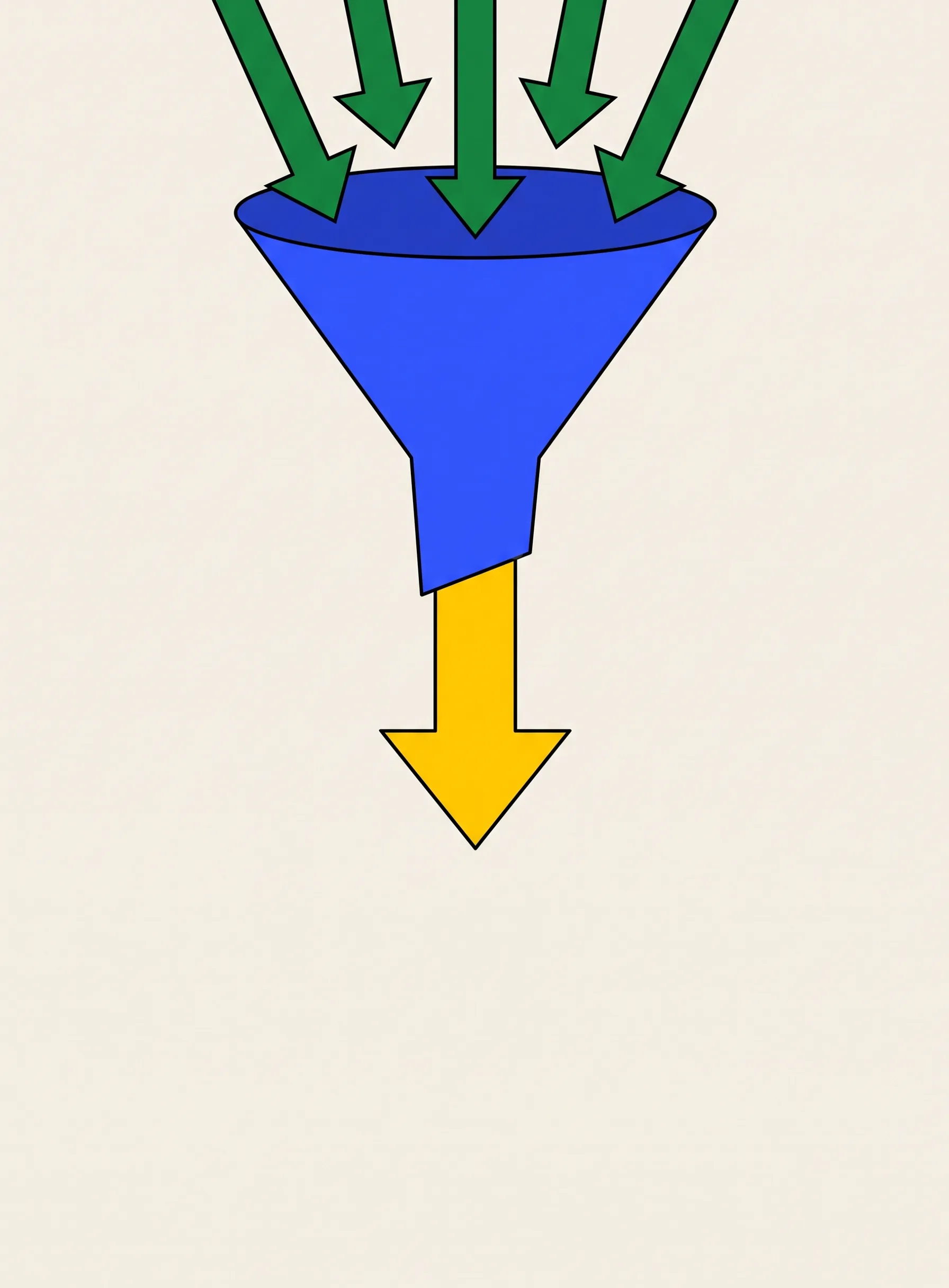
Notice what all three have in common. None of them adds new material. They take English you have already met and move it from the recognition pile to the production pile, which is where the bottleneck actually is. If you want ready-made stock to start from, useful English expressions and English conversation sentences are reasonable sources — but your own failed sentences are better, because they are already proven relevant to your life.
Four drills that actually move speaking
Twenty minutes a day is enough, but only if the twenty minutes are spent on production. These four drills cover the four bottlenecks; weight them toward whichever one your recording exposed.
1. The timed monologue (10 minutes). Pick a topic, press record, talk until the timer ends, do not stop for anything. Then listen once and mark the stalls. This is the core drill and also the least pleasant one, which is exactly why most people skip it and why it works. Rotate topics so you are not rehearsing the same ground: your job, a decision you made recently, something that annoyed you this week, an opinion you would defend, a plan for next year. Start at two minutes and add a minute a week.
2. Shadowing (5 minutes). Take a short clip of natural speech — an interview, a podcast, a scene. Play a few seconds, repeat immediately, and copy the rhythm rather than the words: which syllables get length, where the speaker links words together, where they speed up. English is stress-timed, so what do you want to do in real speech is closer to whaddaya wanna do. Use the same clip all week. This drill improves your listening as much as your speaking, because the fast speech you could not catch turns out to be these same reductions.
3. The frame drill (3 minutes). Take this week’s frames and chunks and put each one into a sentence about your actual life, out loud, a new sentence each day. Aloud is not optional — a chunk you have only ever read is still in the recognition pile.
4. Retell (2 minutes). After anything you watch or read in English, close it and say what happened, out loud, from memory. This is the cheapest drill in the list because it attaches to input you were consuming anyway, and it is the one that converts passive material fastest.
Two rules govern all four. No script. Reading aloud from a text is decoding, not speaking; the choosing is the part that trains. And no correcting mid-sentence. Finish the sentence you started, however bent it is, and note the fix afterwards. Stopping to repair costs three seconds of flow, and the original mistake almost always cost nothing.
Measure it, or you will quit before it works
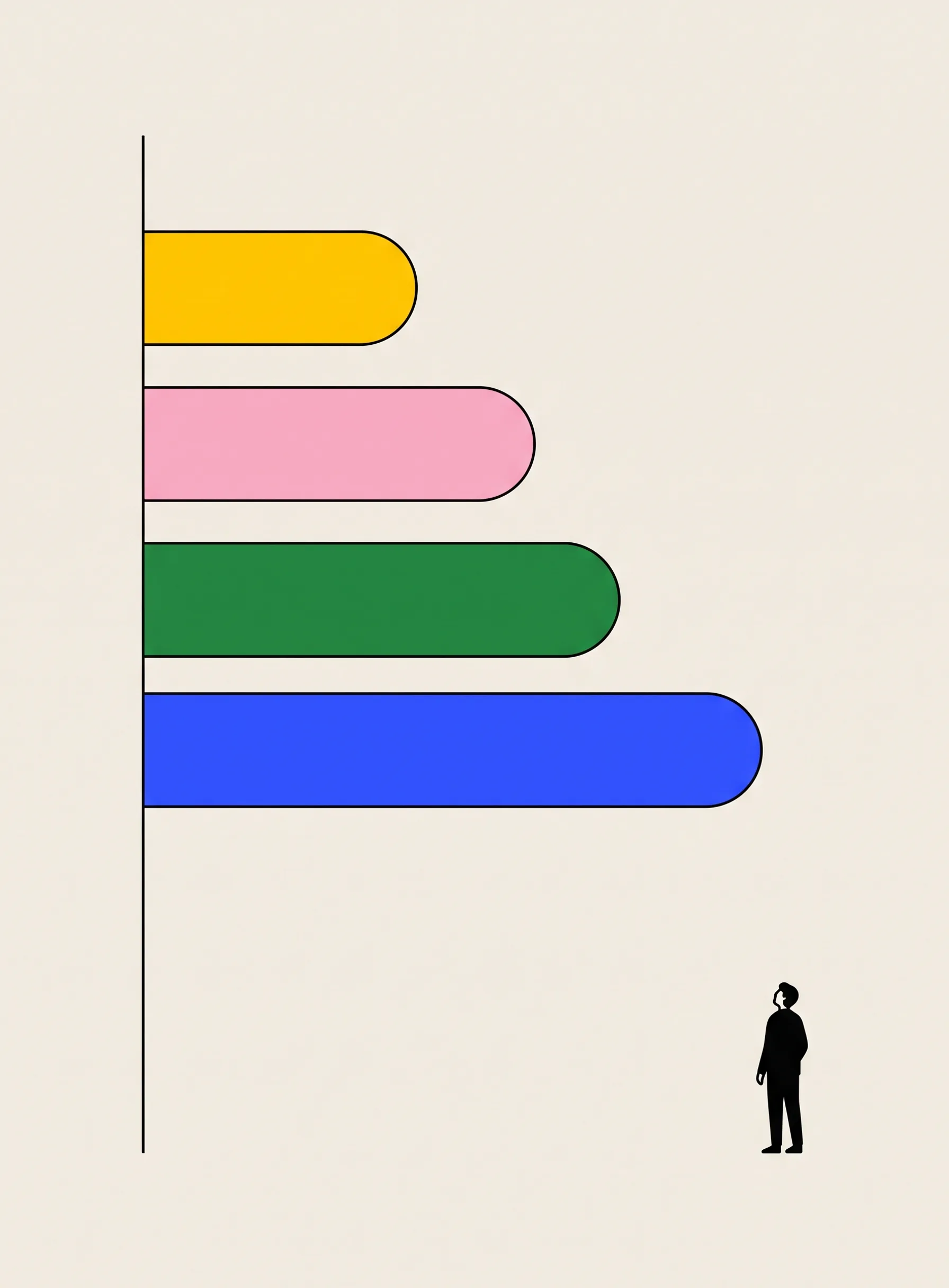
Speaking improves slowly and invisibly. Vocabulary is countable, so apps can show you a number and it feels like progress. Fluency has no obvious counter, which means that by week six — when the change is real but small — most people conclude nothing is happening and stop. Measuring is not bookkeeping; it is the thing that keeps you in the game long enough to get the result.
Four numbers are enough, taken from the same two-minute monologue once a fortnight, on the same kind of topic:
- Stalls per minute. Count every pause longer than three seconds and divide by the length. This is the headline number and it is the one that moves first.
- Words per minute. Roughly comfortable conversational speed is 120–150. Do not chase this directly — speed is a symptom of fluency, not a route to it — but watch it drift upward.
- Longest unbroken stretch. How many seconds you went without a stall. This one tends to improve before the stall count does, and it is the most encouraging early signal.
- Self-corrections. How many times you went back to repair mid-sentence. Falling numbers here mean the internal editor is finally letting you talk.
What a realistic curve looks like: weeks one to three, nothing visible — this is the phase that makes people quit. Weeks four to six, the longest unbroken stretch starts growing. Weeks seven to ten, the stall count drops noticeably and you catch yourself answering a question without translating it first. Weeks eleven to twelve, other people start commenting, which is the lagging indicator, because listeners notice several weeks after the change begins.
Keep the recordings rather than just the numbers. The numbers prove it to your head; playing week one next to week twelve proves it to your ear, and that is the version that actually changes how you feel about speaking.

Ninety days, and the part you cannot do alone
Put together, the plan has three phases and one non-negotiable ingredient.
- Weeks 1–4: unblock. Baseline recording, then daily monologue and shadowing, with the frame drill attached. The goal is not quality — it is getting used to producing English without a script and without stopping. Expect it to feel worse before it feels better, because you are now hearing yourself.
- Weeks 5–8: expand. Monologues go from two minutes to five. Chunk harvesting runs every week. Add a second live conversation to the week. The goal is range: being able to talk about unfamiliar things, not just well-worn ones.
- Weeks 9–12: sharpen. Now accuracy is worth attention, because there is enough flow to correct. Pick one recurring error per week — third-person -s, articles, past tense endings — and monitor only that one while speaking. Never more than one; monitoring everything at once produces silence.
The non-negotiable ingredient is another person. Every drill above is rehearsal, and rehearsal has three things a real conversation does not: you know what is coming, you can pause reality to think, and nobody is waiting. Conversation removes all three at once, and adds listening — you have to plan your next sentence while still decoding theirs. Learners who train only alone usually find their first live conversation feels like starting from zero. Learners who keep two conversations a week running never have that gap to cross.
Twenty minutes with one person, twice a week, is genuinely enough. Pick the topic in advance so the conversation has somewhere to go, but do not script your answers. CoffeeTalk pairs you with native speakers for short conversations and lets you choose a topic first, which makes it easy to run the same format every week and hear your own progress across the weeks rather than guessing at it.
If you want the solo half laid out in more detail, English speaking practice covers the drills; how to speak English fluently goes deeper on why sentences stall; and how to master English conversation picks up once the sentences are already flowing.
Ninety days from a two-minute recording you would rather not listen to is a completely different speaker. Not a perfect one — a fluent-enough one, which is the only kind that exists.
FAQ
How long does it take to improve English speaking?
With twenty minutes of daily speaking practice and two real conversations a week, most intermediate learners hear a clear change in eight to twelve weeks. The first three weeks usually show nothing, which is normal and is where most people give up. What matters is not total study hours but how many of those hours involve producing English out loud without a script.
Why can I understand English but not speak it?
Because recognition and production are separate skills that grow at different rates. Reading and listening build the English you recognise; only speaking builds the much smaller set you can retrieve in under a second while someone waits. If your week is all input, that gap widens on its own. The fix is output practice, not more input.
Can I improve my English speaking alone?
You can get a long way with timed monologues, shadowing, retelling and chunk drills, and those should be your daily core. But solo practice cannot simulate unpredictability, time pressure or listening while planning your reply. Two twenty-minute conversations a week is enough to cover what rehearsal misses.
Should I focus on grammar to speak better English?
Rarely, at intermediate level. Record two minutes of yourself speaking and label every stall: most learners find that genuine grammar doubt causes about one stall in ten, while missing active vocabulary and slow sentence assembly cause the rest. Fix accuracy in the last phase, one recurring error at a time, once there is enough flow to correct.
How do I know if my speaking is actually improving?
Record the same two-minute monologue every fortnight and track four numbers: stalls per minute, words per minute, your longest unbroken stretch and how often you self-correct. The longest stretch usually improves first, around week four to six. Keep the audio as well as the numbers, because comparing week one to week twelve is far more convincing than any score.