
Study method
How to Get Good at English: Why Ten Years of Study Doesn’t Produce Speech

You have studied English for years. You passed the exams, you have a certificate somewhere, and you can read an article in English without much trouble. Then someone asks you a real question in a real room, and what comes out is uh… um… Two hours later, walking home, every sentence you should have said arrives at once, perfectly formed and far too late.
Search for how to get good at English and you mostly get recommendations for materials: this vocabulary app, that grammar book, this method of shadowing box sets. But you did not spend ten years failing for lack of material. The problem is not what you are studying, it is the shape of the work. This article explains why years of study so reliably fail to turn into speech, and then sets out the order that actually works. Nothing in it requires you to buy anything.
Why years of study don’t produce speech
Start with the good news, because it is genuinely good: your English is better than you think. Years of vocabulary and grammar are sitting in your head and none of it has evaporated. What is missing is not knowledge. It is the route from knowledge to your mouth.
Almost every formal English course trains comprehension. You read a passage and answer questions, you listen and pick the right option, you fill in a blank with the correct form. Every one of those is a receiving task. Speaking runs in the opposite direction — it is production. Nothing is given to you; you have to manufacture the sentence from nothing. The two abilities overlap, but they are not the same ability, and someone who has trained one of them for a decade will predictably be poor at the other. That is not a personal failing, it is arithmetic.
On top of that sits a habit that exam-shaped education installs in nearly everyone: accuracy always came first. An error cost you marks, and the reflex survives long after the exams are over. So in a real conversation the sequence runs: build the sentence → check the tense → check the article → check it again. Three seconds pass. Three seconds is an enormous amount of time in live speech, and by the time you are ready the topic has moved on.
Here is the part that is rarely said out loud. People who end up genuinely fluent do not, on average, study harder than people who stall. The reliable difference is that they got things wrong out loud far more often. Everything below is a practical answer to the question of how to do that on purpose.
Studying and acquiring are two different jobs
There are two separate routes into a language, and confusing them wastes more of a learner’s life than any other single mistake.
Studying means knowing a rule consciously. If you can explain that the present perfect connects a past event to the present moment, you have studied it. This is the ability exams measure.
Acquiring means using the rule without consulting it — the sentence is already out of your mouth before any rule was considered.
Test the difference on your own first language. English speakers say a big red car, never a red big car, and almost none of them can tell you why. (There is a rule; opinion precedes size precedes colour.) They have never once broken it. That is acquisition. The mirror image — being able to recite a rule fluently while being unable to use it in speech — is what pure studying produces.
The critical point is that studying does not convert into acquisition on its own. Finishing another grammar book increases the number of rules you can explain and leaves the number of sentences you can produce exactly where it was. Only one thing bridges the two, and that is using the language.
None of which means grammar is useless. It means its job is different. Grammar is a correction tool, not a production engine. Produce first, tidy afterwards. Try to assemble speech out of grammar rules in real time and you will need those three seconds forever. If your foundations feel shaky, work through English grammar basics once — that is a project of a few weeks, not a few years.
Input: a lot of English you can actually follow
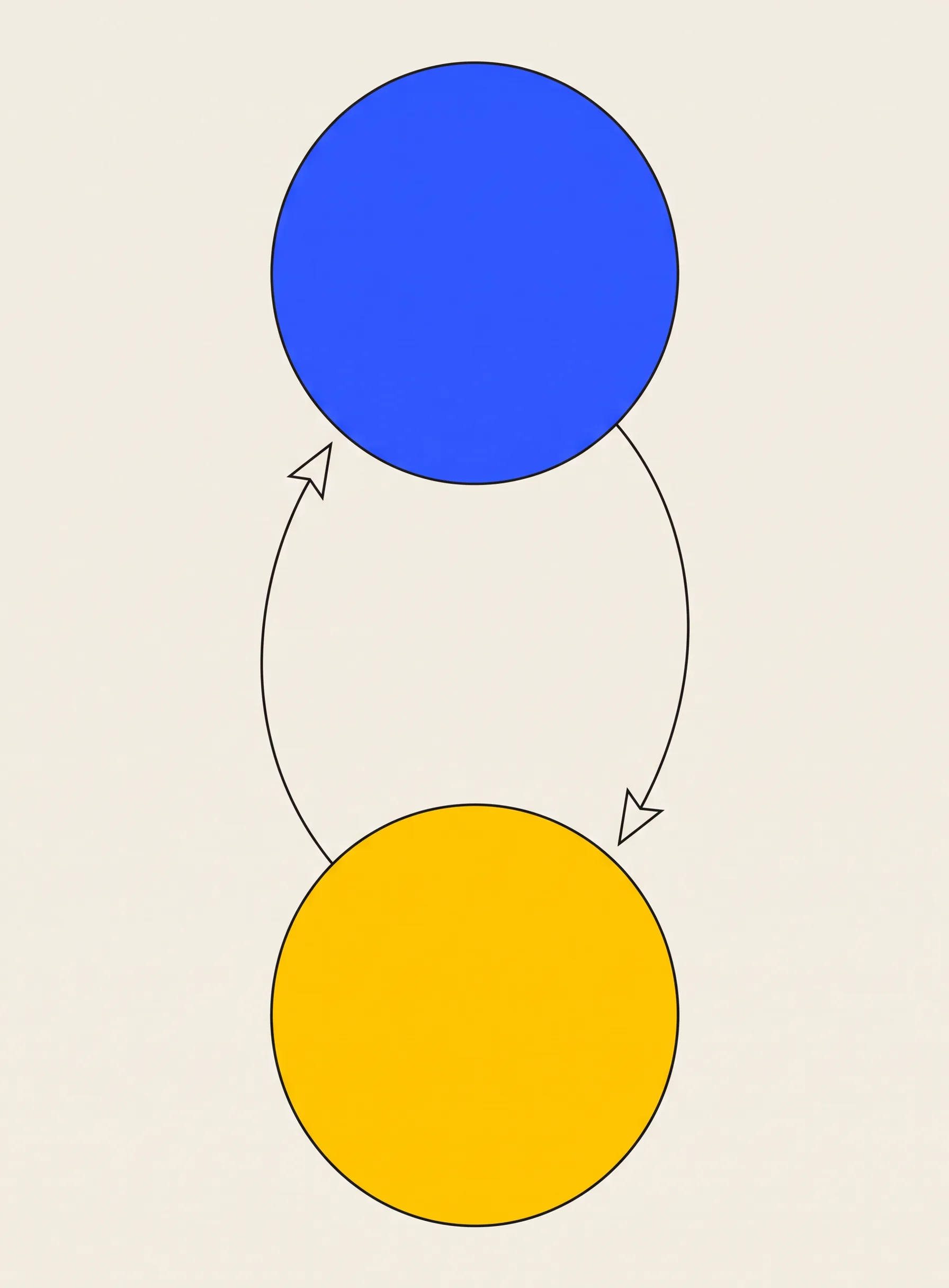
The raw material of acquisition is English you understand. The load-bearing word there is understand, not a lot.
The most common mistake serious learners make is choosing material that is far too hard. They put on the news, they buy a literary novel, they hit twenty unknown words a page, they spend thirty minutes in a dictionary, and they quit on day three. That is not weak discipline. It is a difficulty setting that was never going to work.
The target is material you understand at roughly 90–95%. In practice:
- Reading — more than about five unknown words on a page means drop a level. Young-adult fiction, graded news (News in Levels, BBC Learning English), or the English edition of a book whose plot you already know are all excellent and none of them are beneath you.
- Listening — if one pass gives you the gist, the level is right. If you catch nothing at all, that is not studying, it is noise with good intentions.
- Resist the dictionary. Reading a lot while tolerating fog beats reading a little with every word looked up. Meet a word in six different sentences and its meaning assembles itself, and words learned that way stay.
For video, the efficient pattern is the same clip three times: once with subtitles in your own language for the content, once with English subtitles to bind sound to spelling, once with nothing. One video three times leaves far more behind than three videos once.
As for volume, the number that matters is thirty minutes a day, every day. Thirty minutes daily comfortably beats three hours crammed into a Sunday, because acquisition responds to how often you meet the language rather than to total hours logged. A commute is enough.
Output: get it wrong, out loud, often
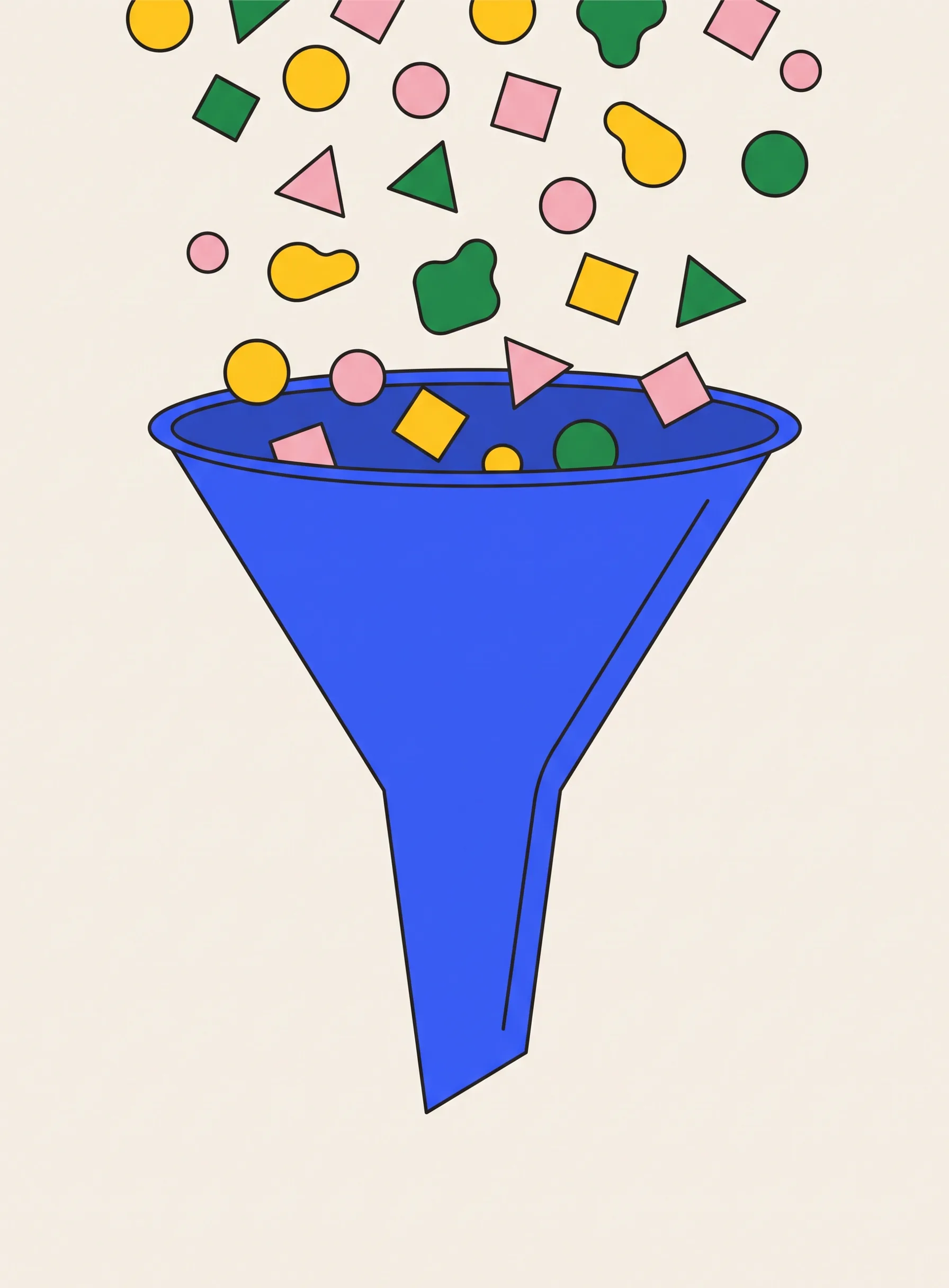
Suppose you only do the input half. Your listening and reading climb steadily and your speaking does not move at all. A great many learners are living in exactly that state: watching films without subtitles and still unable to open their mouths in a meeting.
Output does one thing that input can never do for you: it tells you what you cannot do. While reading, nothing seems to be missing. The moment you try to say I should have fixed that yesterday, you jam. That jam is your next lesson, and there is no way to generate the list without speaking first.
- Do not wait for the finished sentence. Fragments are allowed. Yesterday… the file… I forgot. That communicates. Once it has communicated, you can upgrade it to I forgot to send the file yesterday. Insist on the polished version first and you will never begin.
- Five minutes of talking to yourself, daily. Narrate what you can see on the way to work. Nobody is listening and nothing is at stake, and it still opens the route from head to mouth.
- Write. A diary is speaking in slow motion — real production, but with thinking time, so the cost of entry is low. How to write an English diary sets out a workable method.
- Learn in chunks. Whole phrases like Can I come back to you on that? are what actually arrive under pressure; isolated words are not. Getting the expressions that carry a conversation into your mouth as units beats another hundred flashcards.
And then the one that matters most: you have to be wrong out loud. The largest single jump most learners make is not a grammar point. It is the day they stop treating an error as a cost. Nobody you speak to is tracking your articles. They are tracking what you are trying to say, and that is genuinely all.
Getting through the intermediate plateau
Do the above and you will visibly improve within a few months. Then, for most people, it stops. Everyday conversation works; anything with depth does not. This is the intermediate plateau, and very nearly everyone who abandons English abandons it here.
The cause is structural rather than motivational. At a certain level, about three hundred comfortable phrases will carry ninety per cent of what you want to say. At that moment the pressure to learn anything new disappears. This is why people who use English every day can stay exactly where they are for years: they are using the language without ever extending it.
Three things break it.
- Deliberately choose harder subjects. Not weather and hobbies — work, politics, regret, plans, feelings. Uncomfortable topics force new language into existence. Stay on comfortable ones and the plateau is permanent by construction.
- Retire phrases on purpose. Replace good with solid, reasonable, promising. Replace I think with I’d say or My sense is. Five swaps a week is noticeable inside three months.
- Get feedback. The plateau is the hardest stage to clear alone, because the question is no longer whether you were understood — you were — but whether what you said was natural. You cannot mark that yourself. It requires another person.
One last thing about timing: the plateau usually runs somewhere between six months and two years. Feeling stuck during that stretch is not evidence that you have no talent for languages. It is the normal shape of the curve, and simply knowing the stage exists stops a lot of people from quitting inside it.
A routine you can start today
Reduced to essentials, getting good at English needs three things: input you can follow, every day; imperfect output, every day; and feedback from a person, regularly. The work is not finding better materials. It is getting the ratio right.
- Input, 30 minutes, daily. At 90–95% comprehension. A commute covers it.
- Talk to yourself, 5 minutes, daily. Summarise your day aloud. Write down one sentence you could not build — that note is next week’s syllabus.
- Three lines of diary, three times a week. Finishing matters; polishing does not.
- Two real conversations a week. Fifteen minutes is plenty. Frequency beats duration every time.
- Record yourself every three months. Two minutes on the same subject, saved. Progress is invisible day to day and obvious against a recording from three months ago — this is the single most practical defence against giving up.
Only one item on that list cannot be done alone, and it happens to be the one that moves the needle furthest. Whether your sentence landed, or landed but sounded strange, is information that lives entirely in another person’s face and reply. CoffeeTalk pairs you with native speakers for short conversations, which fits this slot well: four fifteen-minute chats beat one hour-long lesson, and because you choose the topic, you can deliberately pick the uncomfortable subjects the plateau demands.
For the wider self-study plan, continue with the learn English by yourself roadmap; for a method aimed squarely at speaking, see how to study English conversation.

FAQ
If I could only do one thing to get good at English, what should it be?
Speak out loud every day, even for five minutes. Most people who have studied for years already hold plenty of input; what is missing is the route out. Talking to yourself counts, conversation counts, rehearsing silently in your head does not. The sound has to happen.
How many hours a day should I study English?
Frequency matters far more than hours. Thirty to forty minutes every day beats three hours crammed into one weekend, because acquisition responds to how often you meet the language rather than total time logged. If thirty minutes is impossible, do fifteen minutes of input plus five minutes of speaking — but do it daily.
Do I still need to study grammar?
Yes, but for a different job than you think. Grammar is a correction tool, not a production engine: produce the sentence first, tidy it afterwards. Working through the basics once takes a few weeks; after that, looking up only the points you actually trip over is far more efficient than finishing one more grammar book.
Does shadowing films and TV actually work?
It works under two conditions. The material must sit at around 90-95% comprehension, otherwise it is just noise, and you have to repeat it. Watching one scene three times — subtitles in your language, then English subtitles, then none — leaves far more behind than watching three new scenes once each.
How long does it take to get good at English?
Everyday conversation usually becomes comfortable within six months to a year of consistent daily work, and is then followed by an intermediate plateau lasting roughly six months to two years. Feeling stuck in that stretch is the normal shape of the curve, not a sign that you lack talent — and knowing the stage exists is most of what stops people quitting inside it.