
English learning
English Grammar Basics: The Rules That Actually Matter for Speaking

Here’s an uncomfortable truth about English grammar: most learners who can’t hold a conversation already know more rules than they need. The problem was never the rules. It’s that grammar was taught as a subject to be completed rather than a tool to be used — so it lives in a notebook instead of in your mouth.
This guide flips that around. Below are the English grammar basics that actually carry a conversation: sentence order, the three tenses you’ll use constantly, the small words everyone trips on, and how to ask a question. That’s roughly 80% of everyday English. Everything else — the perfect continuous, the third conditional, the subjunctive — can wait until you’re already speaking.
Why English grammar feels harder than it is
English grammar has a reputation it doesn’t quite deserve. Compared with many languages, it’s mechanically simple: nouns have no gender, adjectives never change to agree with the noun, and verb endings are almost bare.
What makes it feel hard is usually one of these:
- You’re studying rules you’ll rarely use. Textbooks give equal weight to the present simple and the future perfect continuous. Real conversation doesn’t.
- You’re translating from your own language. If your language puts the verb last or drops articles, English word order feels alien — that’s an interference problem, not a difficulty problem.
- You know the rule but can’t apply it live. This is the big one. Recognising correct grammar on a test and producing it in real time under pressure are separate abilities, and only one of them is trained by exercises.
That last point is why this guide is short. Fewer rules, used constantly, beats more rules, used never. If understanding but not speaking sounds familiar, our piece on why you understand but can’t speak digs into exactly that gap.
Word order: the backbone of every English sentence
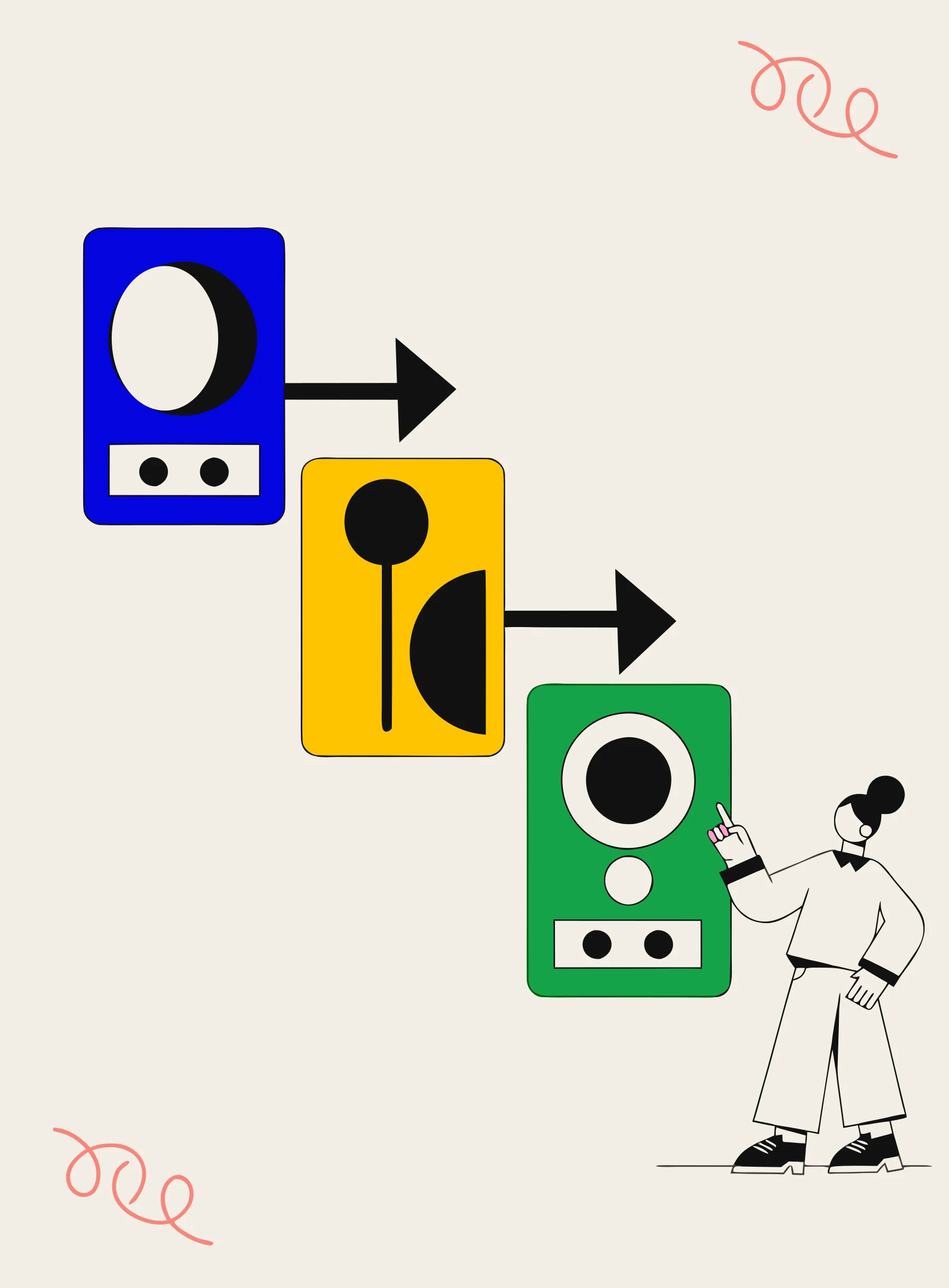
English carries meaning through order, not endings. This is the single most important rule in the language, because getting it wrong changes who did what:
Subject → Verb → Object. The dog bit the man. Reverse it and you get a completely different story — the words are identical, only the order moved.
Extend it and you get the default shape of nearly every English sentence:
- Subject — Verb — Object — Place — Time. I met my friend at the cafe yesterday.
- Time can jump to the front for emphasis: Yesterday I met my friend at the cafe. Place and time can swap in a pinch, but the subject-verb-object core never moves.
- Adjectives go before the noun: a red car, never a car red.
If your first language is Korean, Japanese or Turkish, the verb-last habit is the thing to actively unlearn. Drill the SVO core until it’s automatic and a surprising amount of English clicks into place at once.
Read also: English Basics for Beginners: What to Learn First, in Order
The three tenses that cover most conversation
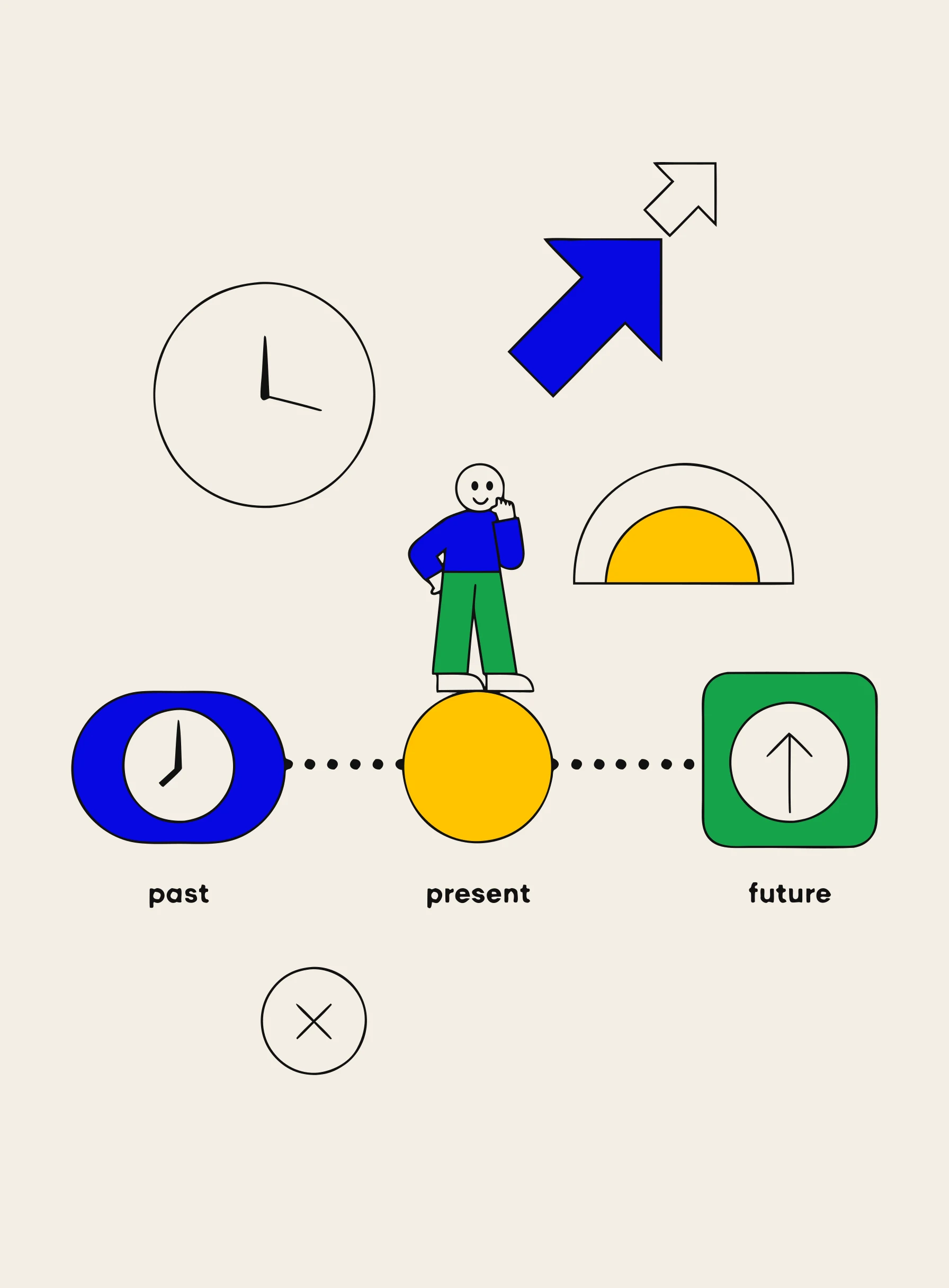
English has twelve tense forms. You can hold a genuine conversation with three of them:
- Present simple — habits, facts, permanent things. I work in Seoul. She drinks coffee every morning. The only trap is the third-person -s: he works, not he work.
- Past simple — finished actions at a finished time. I went there last year. We talked for an hour. Regular verbs take -ed; the irregular ones (go/went, see/saw, take/took) are the only real memorisation cost in this whole guide.
- Present continuous — happening now, or arranged for soon. I’m learning English. We’re meeting on Friday. Built with am/is/are + -ing.
For the future, you don’t need a fourth tense — you need two phrases. going to for plans (I’m going to visit my parents) and will for decisions made in the moment (I’ll get it). That’s it. Native speakers use these far more than any textbook future tense.
Learn these three plus the two future phrases properly and you can talk about your life, your past and your plans — which is most of what conversation actually is.
A, an, the — the small words that trip everyone up
If your language has no articles, this section is the one that will cost you the most — and it’s worth knowing upfront that article mistakes almost never break understanding. They mark you as a learner; they don’t stop the conversation. Fix them, but don’t let them silence you.
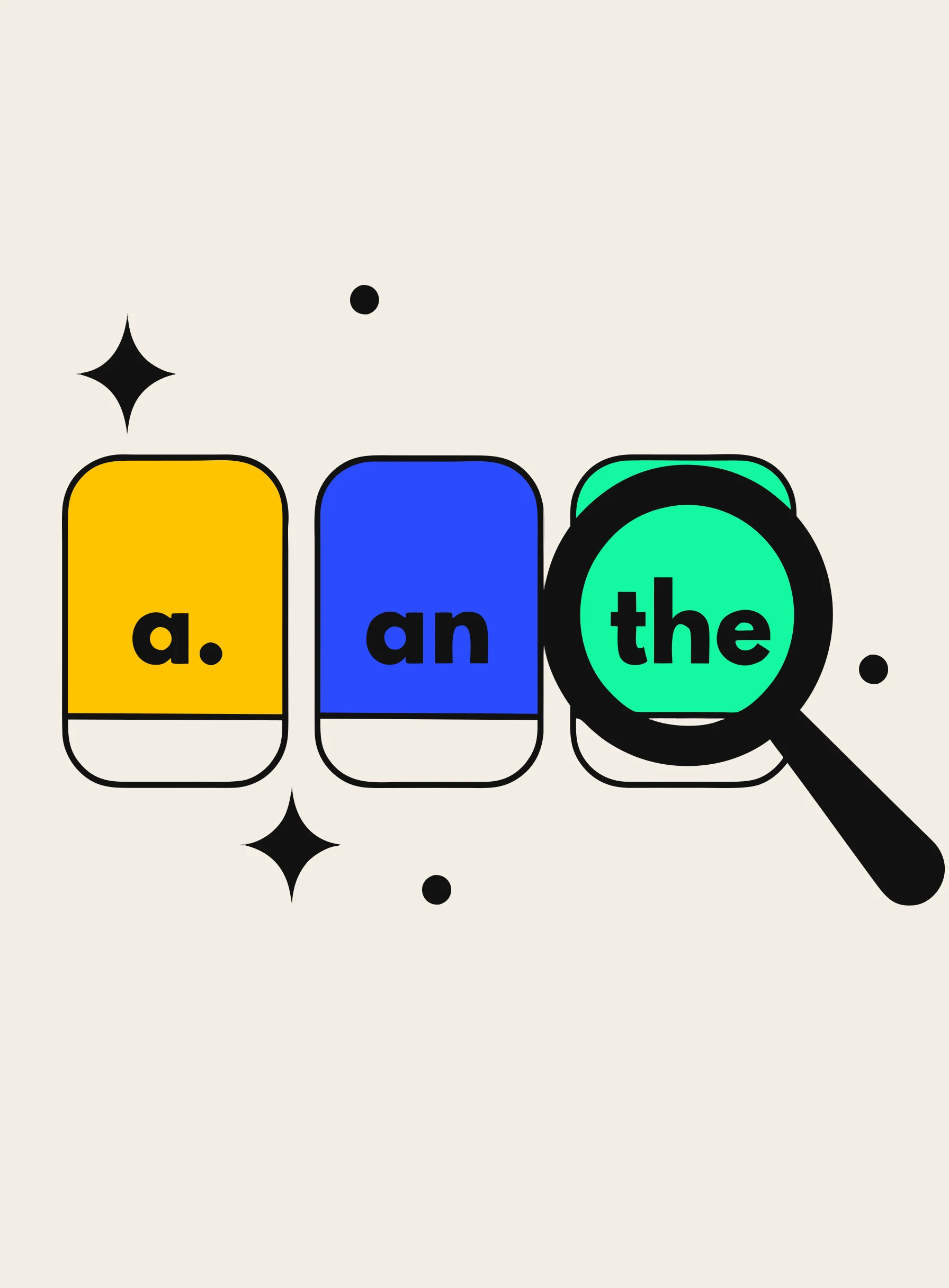
The core distinction is simpler than it looks:
- a / an — one of many, mentioned for the first time, or not specific. I saw a dog. (Which dog? Doesn’t matter.) Use an before a vowel sound: an hour, a university — it follows the sound, not the letter.
- the — both of us know which one. The dog was barking. (That dog. The one I just mentioned.)
- no article — plurals and uncountable nouns in general. Dogs are loyal. Coffee is expensive.
The usable shortcut: ask yourself whether the listener already knows which one you mean. If yes, the. If no, a. If you’re speaking generally about all of them, neither. Plurals follow the same logic — and for building the vocabulary you'll attach these to, see our list of everyday English vocabulary.
Questions and negatives: the do / does / did trick
Conversation isn’t just statements — it’s asking things back. English does this with one strange helper verb, and once you see the pattern it’s mechanical:
- Present: Do you like coffee? / Does she live here? / I don’t know.
- Past: Did you go? / I didn’t see him.
Two rules make this reliable:
- The helper takes the tense; the main verb goes bare. Did you go? — not Did you went? This is the most common mistake in the whole pattern.
- With be, there’s no helper at all. Just flip the order: Are you ready? Is he here?
Add the question words — what, where, when, who, why, how — on the front and you can ask about anything: Where did you go? Why is she late? Asking good questions is also the cheapest way to keep a conversation alive when your own vocabulary runs out, which is a skill our guide on how to study English conversation leans on heavily.
From grammar rules to real sentences
Everything above fits on a single page — and that’s the point. You are almost certainly not held back by the grammar you don’t know. You’re held back by the grammar you know but have never had to produce at conversational speed, with someone waiting for your answer.
That pressure is the training. It’s also the one thing textbooks and apps structurally cannot give you, which is why CoffeeTalk exists: real people, video-verified so you know there’s an actual human on the other side, matched near your level, with ready-made topics so the conversation starts instead of stalling. Your grammar stops being a rule and starts being a reflex somewhere around the tenth conversation.
Ready to use it? Start with introducing yourself in English — the one exchange guaranteed to happen — and then work through mastering English conversation.
FAQ
What are the basic rules of English grammar?
The essentials are: keep subject-verb-object word order, put adjectives before nouns, use the present simple for habits and facts, the past simple for finished actions, and the present continuous for what's happening now. Add do/does/did to form questions and negatives, and use a/an for something non-specific and the for something your listener already knows.
What is the most important English grammar rule?
Word order. English carries meaning through position rather than word endings, so subject-verb-object isn't a style preference — it decides who did what. 'The dog bit the man' and 'The man bit the dog' use identical words and mean opposite things. Get the SVO core automatic and much of English falls into place.
How many English tenses do I need to speak?
Three cover most conversation: present simple, past simple and present continuous. For the future you don't need a separate tense — 'going to' handles plans and 'will' handles decisions made in the moment. That's enough to talk about your life, your past and your plans, which is most of what conversation is.
Do I need perfect grammar to speak English?
No. Most grammar mistakes — especially with articles — mark you as a learner without breaking understanding at all. Fluency comes from producing English under real-time pressure, and waiting until your grammar is perfect before speaking guarantees it never becomes automatic. Speak first, correct as you go.
How do I learn English grammar for speaking, not tests?
Study a small set of high-frequency rules, then force yourself to produce them out loud in real conversation. Recognising correct grammar on a test and generating it live are different skills, and only speaking trains the second one. Learn a rule, then use it in ten real sentences with a real person the same week.