
Speaking phrases
How to Introduce Yourself in English: Phrases, Examples & a Simple Structure

Whether you’re walking into a job interview, joining a video call, or meeting a language partner for the first time, the opening move is always the same: you have to introduce yourself. The good news is that of everything you’ll ever say in English, your self-introduction is the easiest to prepare — because you already know the subject by heart.
This guide gives you a simple structure, ready-to-use phrases, and real examples for how to introduce yourself in English — in formal settings, in casual ones, and in the one that trips people up most: out loud, to a real person. Steal the lines you like, drop the ones you don’t, and make them yours.
The simple structure: present, past, future
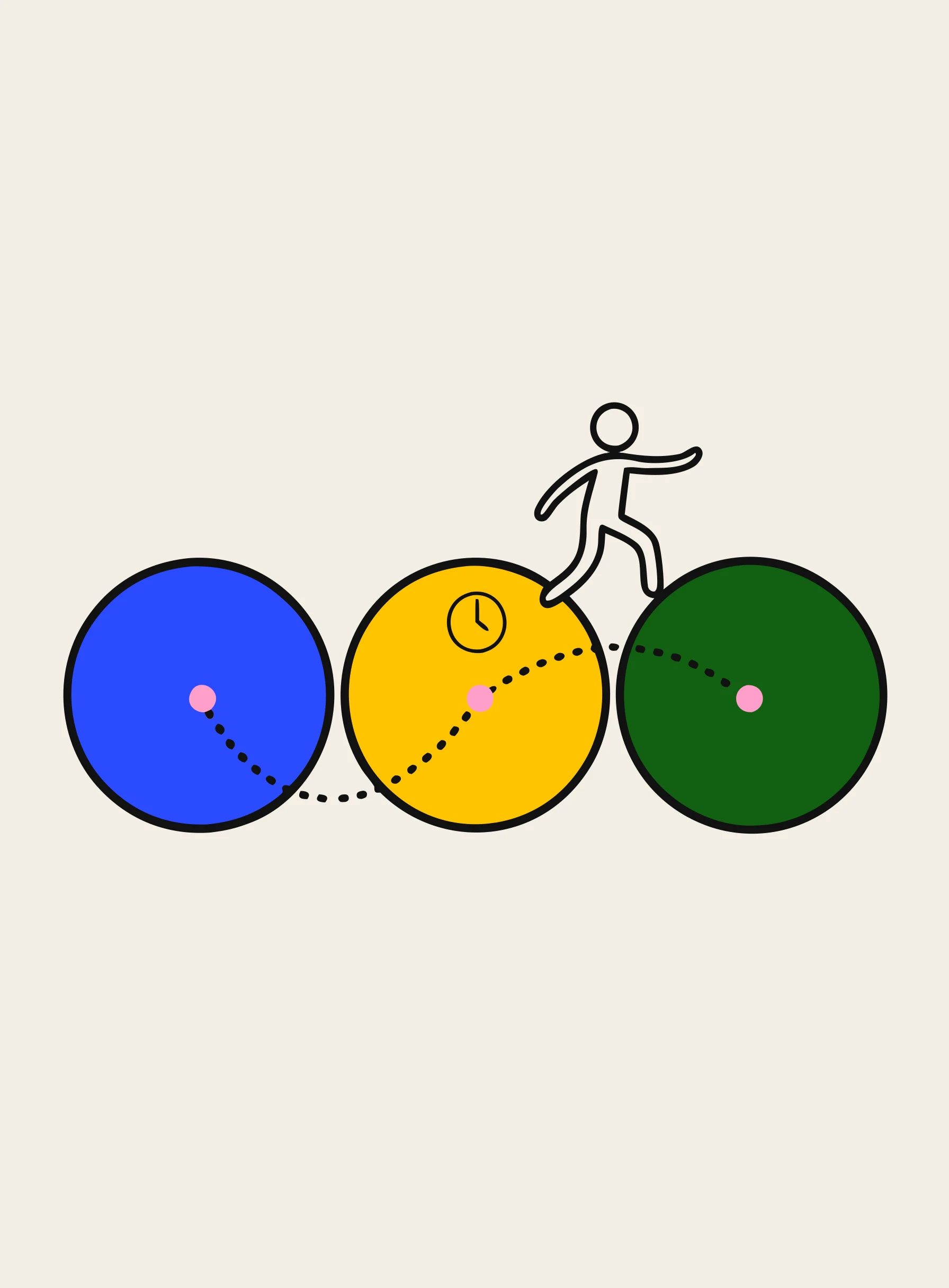
Before you memorise phrases, memorise a shape. Almost every good self-introduction follows the same three beats: present, past, future. It works because it hands your listener a tidy little story instead of a random pile of facts.
- Present — who you are right now: your name, what you do, where you’re from. ‘Hi, I’m Mara. I’m a nurse from Porto.’
- Past — one line of background that’s relevant here: ‘I’ve been working in paediatrics for about five years.’
- Future — why you’re here or what you’re after: ‘…and I’m learning English so I can work abroad.’
Three sentences and you’re done. Stretch each beat into more detail for a formal setting, or trim it to a single line for a quick hello — but the skeleton never changes, which means you never have to invent one from scratch under pressure again.
Opening phrases: from casual to formal
The first few words set the tone, so match your opener to the room — too casual in an interview sounds sloppy; too formal at a party sounds stiff.
Casual (friends, parties, language partners):
- ‘Hi, I’m Sam.’
- ‘Hey, nice to meet you — I’m Sam.’
- ‘I don’t think we’ve met. I’m Sam.’
Neutral (meetings, new colleagues, video calls):
- ‘Hello, my name’s Sam Rivera.’
- ‘Hi everyone, I’m Sam, the new designer.’
Formal (interviews, conferences, formal first meetings):
- ‘Good morning. My name is Sam Rivera, and it’s a pleasure to meet you.’
- ‘Thank you for having me. I’m Sam Rivera.’
Notice how much work the contractions do: ‘my name’s’ and ‘I’m’ sound relaxed and natural, while the full ‘my name is’ lands as more formal. Both are correct — the choice is simply tone.

Read also: How to Learn English by Yourself: A Six-Month Plan That Survives
Introducing yourself in a job interview
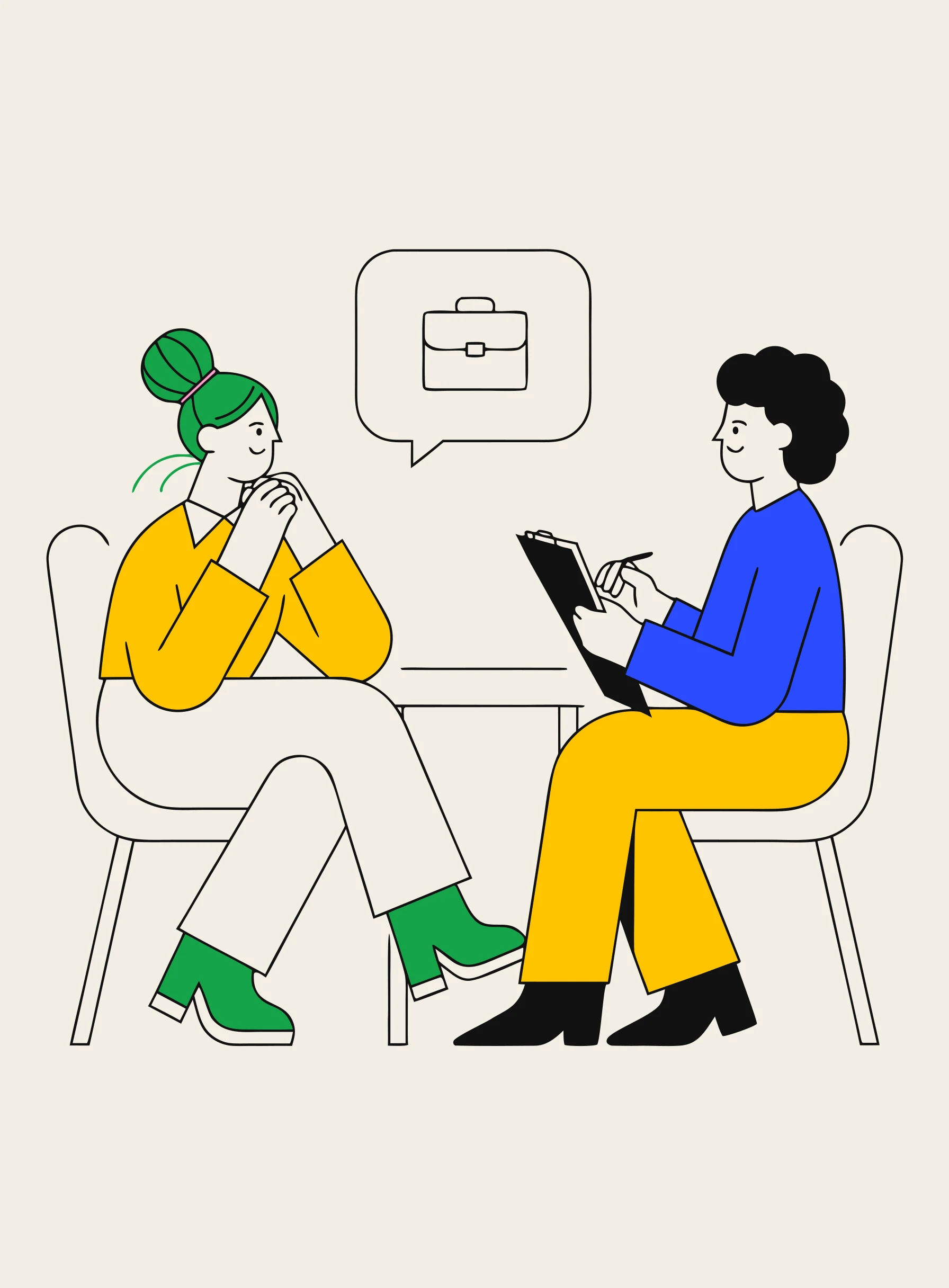
The interview self-introduction — usually prompted by ‘so, tell me about yourself’ — isn’t your life story. It’s a 30-to-60-second pitch that quietly answers one question: why are you right for this? Use the present-past-future frame, but aim every beat at the job.
A worked example:
‘Thanks for having me. I’m Sam Rivera, a graphic designer with about six years’ experience, currently focused on branding for small businesses. Before this I worked at a print studio, which taught me the production side inside out. I’m really drawn to this role because you work with early-stage startups — helping a brand find its voice from scratch is exactly what I love doing.’
Present (who I am), past (relevant background), future (why this job) — the same three beats, pointed. Keep it tight, land on why you want this role, then stop talking. For the rest of the conversation, not just the opener, see our guide on how to practise speaking a new language.
Meeting people casually and online
Outside interviews, introductions get shorter and warmer — and they almost always end with a question that hands the conversation back. That last part is the trick most learners miss: a good introduction isn’t a monologue, it’s an opening.
- Add a hook — one small, interesting detail. ‘I’m Lena. I just moved here from Warsaw — still hunting for a decent coffee.’
- Hand it back — finish with a question. ‘…so what about you — have you lived here long?’
Online it’s the same move, minus the handshake. On a video call or a language-exchange app you might say: ‘Hi! I’m Lena, I’m from Poland and I’m learning English — could you tell I’m a little nervous? What should I call you?’ A touch of honesty like that instantly lowers the stakes for both of you. And if freezing mid-sentence is the real worry, we wrote a whole piece on why you understand but can’t speak.
Common mistakes that make you sound rehearsed
A self-introduction should sound prepared, not memorised — and listeners hear the difference instantly. The usual culprits:
- Reciting a wall of text. Twelve sentences without a pause sounds like a speech. Say two or three, then let the other person react.
- Translating in your head first. Building each sentence in your native language and converting it leaves you slow and stilted. Learn your intro as ready-made English chunks instead.
- Oversharing. Your whole CV isn’t an introduction. Pick the one detail that fits this room.
- No question at the end. Forgetting to hand the conversation back leaves an awkward silence. Always leave a door open.
- Apologising for your English. ‘Sorry, my English is bad’ dents the conversation before it starts. A simple ‘I’m still learning’ is friendlier and far more confident.
From script to real conversation
Here’s the part no article can do for you: a self-introduction only turns smooth once you’ve said it out loud to real people, enough times that it stops feeling like a script. You can rehearse in the mirror all week, but the first time a real person says ‘tell me about yourself’ and actually listens, it’s a different sport.
That’s the gap CoffeeTalk is built to close. Every member passes a quick video verification, so the person you introduce yourself to is real and there to practise — not a bot or a borrowed photo. You’re matched near your level, so the stakes stay low, and you’re handed ready-made topics so the conversation keeps moving after ‘nice to meet you’. Your introduction becomes the first of many reps — and the more real ones you get, the sooner it stops being something you recite and starts being something you just say. If you’re wondering how many reps that takes, our guide on how long it takes to speak a new language puts real numbers on it.

FAQ
How do I introduce myself in English?
Use a simple present-past-future structure: say your name and what you do now, add one line of relevant background, then say why you're here or what you're aiming for. For example: 'Hi, I'm Mara, a nurse from Porto. I've worked in paediatrics for five years, and I'm learning English to work abroad.' Keep it to a few sentences and end with a question.
How do I introduce myself in a job interview in English?
When the interviewer says 'tell me about yourself', give a 30-to-60-second pitch aimed at the role, not your life story. Cover who you are now, one relevant piece of background, and why you want this specific job — then stop. Practising it out loud beforehand is what makes it sound natural rather than memorised.
What should I say about myself in English?
Pick details that fit the situation: your name and job in a professional setting; your name, where you're from and a hobby in a casual one. Choose one interesting hook rather than listing everything, and finish with a question so the other person can respond.
How can I introduce myself without sounding rehearsed?
Say only two or three sentences before letting the other person react, learn your introduction as natural English chunks instead of translating word by word, and don't recite a long block of text. A short, warm intro that ends in a question always sounds more natural than a memorised speech.
How long should a self-introduction be?
In casual settings, one or two sentences plus a question is plenty. In a job interview, aim for 30 to 60 seconds. The rule of thumb: say enough to be interesting, then hand the conversation back before the other person's attention drifts.