
Korean culture
How to Say Thank You in Korean (Formal, Casual and In Between)
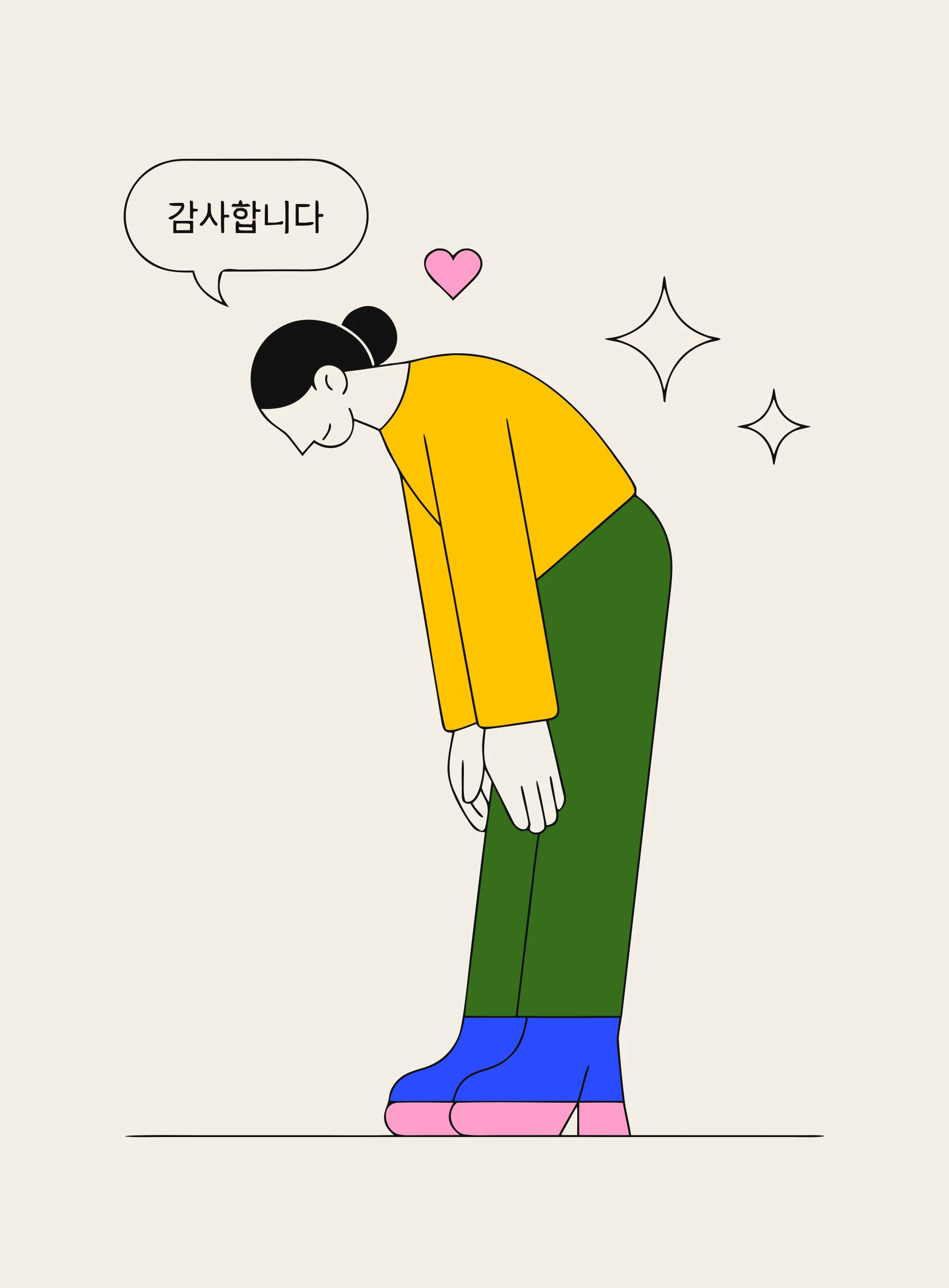
If you only ever learn one Korean word, make it 감사합니다 (gamsahamnida). It’s polite, it works almost everywhere, and no one will ever be offended by it.
But Korean doesn’t have one thank-you — it has a ladder of them, and which rung you pick says something about the person you’re talking to. Say gamsahamnida to your closest friend and you sound oddly stiff, like you’re thanking a bank teller. Say the casual version to your partner’s father and you have a problem. Here’s the whole ladder, what each rung sounds like, and how to answer when someone thanks you.
The quick answer: 감사합니다
감사합니다 (gamsahamnida) is how to say thank you in Korean in almost any situation with someone who isn’t a close friend. Shop staff, a taxi driver, a colleague, a stranger who held a door, your teacher — all 감사합니다.
Two things make it the default:
- It’s formally polite. It uses the highest everyday speech level, so it can’t read as rude no matter who you say it to.
- It’s neutral. It carries no particular warmth or distance — it just does the job cleanly.
Pair it with a small nod or a slight bow from the waist. The bow isn’t ceremonial; it’s closer to what a smile does in English — a physical part of the phrase rather than an extra ritual. If you learn nothing else here, 감사합니다 plus a nod will carry you through an entire trip to Korea.
감사합니다 vs 고맙습니다 — what's the difference?
This is the question every learner hits second, and the internet is full of confident wrong answers. So, clearly:
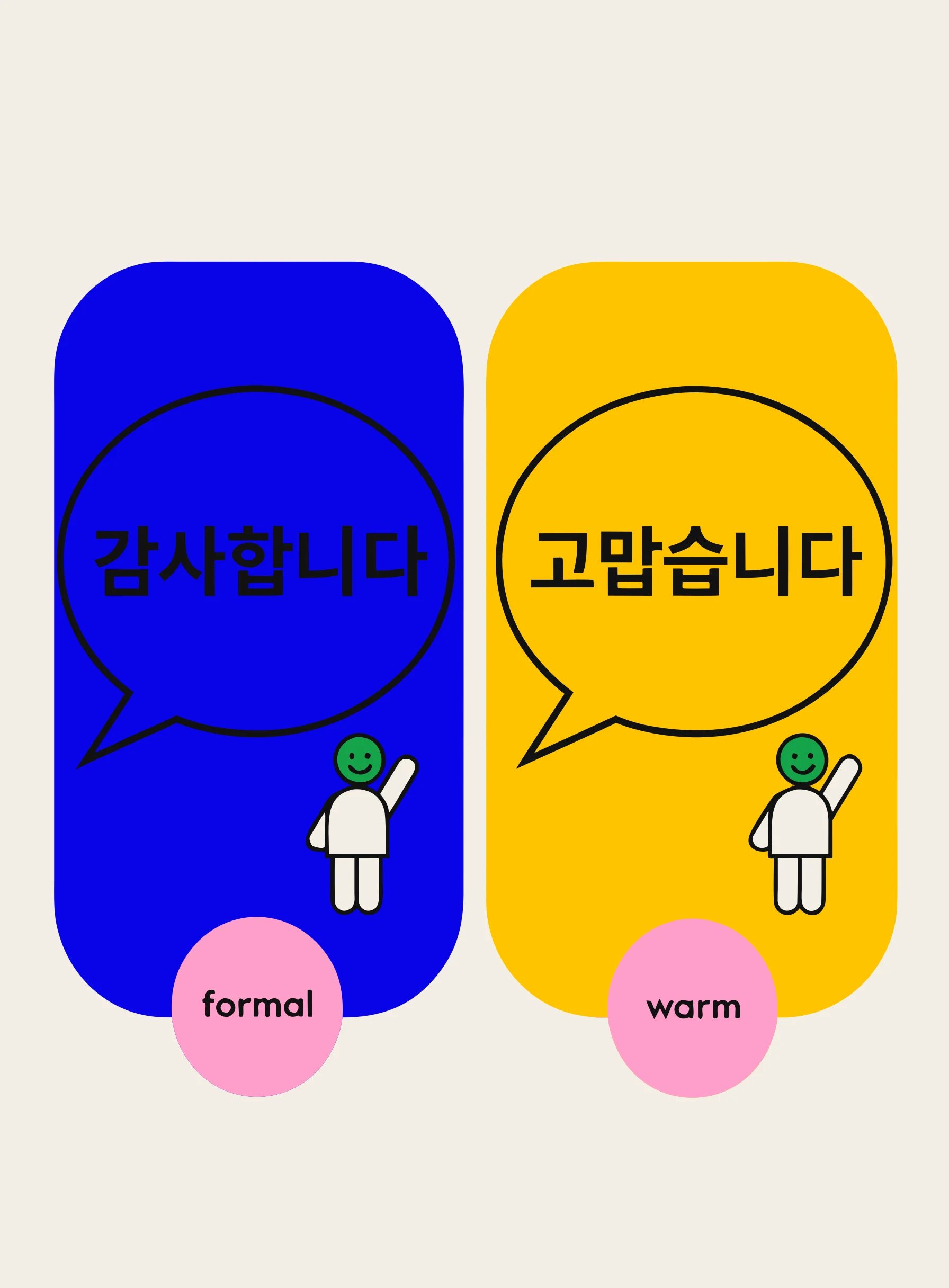
고맙습니다 (gomapseumnida) is also formally polite. It is not the casual version of 감사합니다 — they sit on the same politeness level and you can use either one with a stranger.
The real difference is where the words come from and how they feel:
- 감사합니다 comes from a Sino-Korean root (감사, from the Chinese characters for ‘feel’ and ‘thanks’). It feels a touch more formal and official — the one you hear in announcements, business settings and customer service.
- 고맙습니다 comes from a native Korean root (고맙다). It feels a little softer and warmer — more human, less institutional. Some Koreans deliberately prefer it for exactly that reason.
Practically: you can use either and be correct. If you want a rule of thumb, use 감사합니다 in formal and transactional situations, and 고맙습니다 when you want the thanks to feel a bit more personal — a neighbour who did you a favour, a colleague who stayed late to help.
Read also: How to Say I Love You in Korean (And When Koreans Actually Say It)
Casual ways to say thank you
Once you’re talking to friends, the formal endings drop away. Two rungs matter:
- 고마워요 (gomawoyo) — polite but relaxed. Good for someone you know reasonably well but aren’t close with, or someone slightly younger you still want to be courteous to. It’s the everyday middle ground.
- 고마워 (gomawo) — fully casual. This is 반말 (banmal), informal speech, reserved for close friends, people clearly younger than you, and family. Between friends this is the normal thank-you; anything more formal would sound like you’re joking or annoyed.
The trap for learners is that the casual forms aren’t just ‘shorter’ — they encode a relationship. Using 고마워 with someone older or senior isn’t informal, it’s rude. The safe move as a learner: stay one rung more formal than you think you need until the other person drops down first. Koreans often make it explicit and suggest speaking comfortably — that’s your green light.
You’ll notice this is the same logic behind the sibling-style words fans know from K-dramas — our guide to what oppa really means covers the age-and-closeness system that drives all of it.

Saying thank you more strongly
To add weight, put an intensifier in front. These stack onto any rung of the ladder:
- 정말 감사합니다 (jeongmal) — ‘really, thank you’. The most natural way to add sincerity.
- 너무 감사합니다 (neomu) — literally ‘too much’, but in modern speech it just means ‘so much’. Very common and warm.
- 대단히 감사합니다 (daedanhi) — ‘thank you very much’, but noticeably formal. You hear it in speeches and announcements more than in conversation.
- 감사드립니다 (gamsadeurimnida) — a humble, deferential form. This is business-email and public-speech territory. Correct, but overkill for a shopkeeper.
One phrase worth knowing and handling with care: 수고하셨습니다 (sugohasyeotseumnida), roughly ‘thanks for your hard work’. It’s standard at the end of a shift or a project — but it’s said downward or sideways, to peers and juniors. Saying it to someone clearly senior to you can land as presumptuous, as though you’re evaluating their effort. To a boss, plain 감사합니다 is the safer choice.
How to reply when someone thanks you
Textbooks teach 천만에요 (cheonmaneyo) as ‘you’re welcome’. Real Koreans almost never say it — it sounds stiff and dated, a bit like answering ‘think nothing of it’ in English. Skip it.
What people actually say:
- 아니에요 (anieyo) — literally just ‘it isn’t’, used the way English uses ‘it’s nothing’. The everyday default. Modest, warm, always fine.
- 별말씀을요 (byeolmalsseumeullyo) — ‘don’t mention it’. Polite and slightly formal; good with someone older or senior.
- 괜찮아요 (gwaenchanayo) — ‘it’s fine / no problem’. Casual and common.
- 네 (ne) with a nod — yes, just ‘yes’. Between friends, a nod and a short 네 or 응 is often the whole reply.
Notice the pattern: the natural Korean response to thanks is to minimise what you did, not to accept credit for it. That instinct matters more than the exact words.

From knowing the words to actually saying them
You now know more Korean thank-yous than most learners — but reading a ladder of phrases and choosing the right rung in the moment, with the right tone, are two very different skills. The gap between them closes in one place only: real conversations with real Korean speakers.
That’s what CoffeeTalk is built for. Every member passes a quick video verification, so you’re practising with an actual person who came to talk — not a bot. You’re matched near your level and given ready-made topics, so you’re never sitting in silence hunting for something to say. Starting from zero? Pair this with how to say hello in Korean, and if you want the culture behind the language, what aegyo means. For the wider method, see how to practise speaking a new language.

FAQ
How do you say thank you in Korean?
The standard way is 감사합니다 (gamsahamnida), a formally polite thank-you that works with strangers, shop staff, colleagues and anyone you aren't close to. Say it with a small nod or slight bow. For close friends you'd use the casual 고마워 (gomawo) instead.
What is the difference between 감사합니다 and 고맙습니다?
Both are formally polite and either is correct with a stranger — 고맙습니다 is not the casual version. The difference is feel: 감사합니다 comes from a Sino-Korean root and sounds slightly more official, while 고맙습니다 comes from a native Korean root and sounds a little warmer and more personal.
How do you say thank you casually in Korean?
고마워 (gomawo) is the fully casual thank-you, used with close friends, family and people clearly younger than you. 고마워요 (gomawoyo) is a polite but relaxed middle ground. Don't use 고마워 with someone older or senior — casual speech in Korean signals a relationship, so it reads as rude rather than friendly.
How do you reply to thank you in Korean?
Say 아니에요 (anieyo), meaning 'it's nothing' — that's the everyday default. 별말씀을요 is a more polite option for someone older or senior, and 괜찮아요 works casually. Avoid the textbook 천만에요: it's grammatically correct but sounds stiff and dated, and Koreans rarely say it.
How do you say thank you very much in Korean?
Add an intensifier: 정말 감사합니다 ('really, thank you') is the most natural, and 너무 감사합니다 is common and warm. 대단히 감사합니다 also means 'thank you very much' but is formal enough that it's mostly heard in speeches and announcements rather than conversation.