
Korean culture
Korean Swear Words: What They Really Mean and How Strong They Are
If you have watched more than a few episodes of anything Korean, you have already heard them. A character gets cut off in traffic, a variety show guest loses a game, someone finds out who has been lying to them — and a short, sharp word lands, the subtitle says damn, and the studio audience reacts far more strongly than damn would explain. That gap between what you heard and what you read is the reason this article exists.
Korean swear words are not difficult to learn. There are perhaps a dozen that matter, and you will absorb most of them without trying. What almost nobody explains is the part that actually matters: how strong each one is, who you would be insulting, and why a word that looks casual on screen can end a friendship in real life. This is a recognition guide, not a permission slip. The goal is that you understand exactly what is being said around you — and understand precisely why you should almost never say it yourself.
Why Korean swearing is not like English swearing
English profanity is largely about the words. Certain syllables are marked as taboo, and using one is a small transgression regardless of who is listening. You can say the same rude word to your friend and to a stranger and, while the reception differs, you have broken roughly the same rule in both cases.
Korean does not work that way, and this is the single most important thing to understand before any vocabulary list. Korean is built on a speech-level system: every sentence you utter encodes how you rank the listener relative to yourself. There is casual speech, banmal, used downward and between intimates, and polite speech, jondaetmal, used upward and outward. Profanity does not sit outside that system — it sits at the very bottom of it.
The practical consequence is that in Korean the offence is a product of two things, not one: the strength of the word and the relationship you have just claimed by using it. A mid-strength word aimed at a close friend of the same age is nothing at all. The same word aimed at someone five years older is not a mid-strength insult — it is a declaration that you do not consider them worth basic respect, which is a far bigger deal than the word itself. Korean speakers process the second part first.
This is why the standard learner instinct fails here. People assume that if they use a mild-looking word, they are taking a small risk. In Korean they may be taking an enormous one, because the risk was never mostly in the vocabulary. Two other features follow from the same logic:
- Swearing is a marker of intimacy, not just anger. Among close friends of the same age, casual profanity can function almost as punctuation — proof that no formality is required between you. You will hear this constantly in films about school friends. It is earned by years of closeness, and it does not transfer.
- It is heavily gendered and heavily generational. What a group of twenty-year-old men say to each other is not a template for anything else. Older speakers, mixed company and any workplace operate under completely different rules.
The severity scale, from mild frustration to genuinely unforgivable
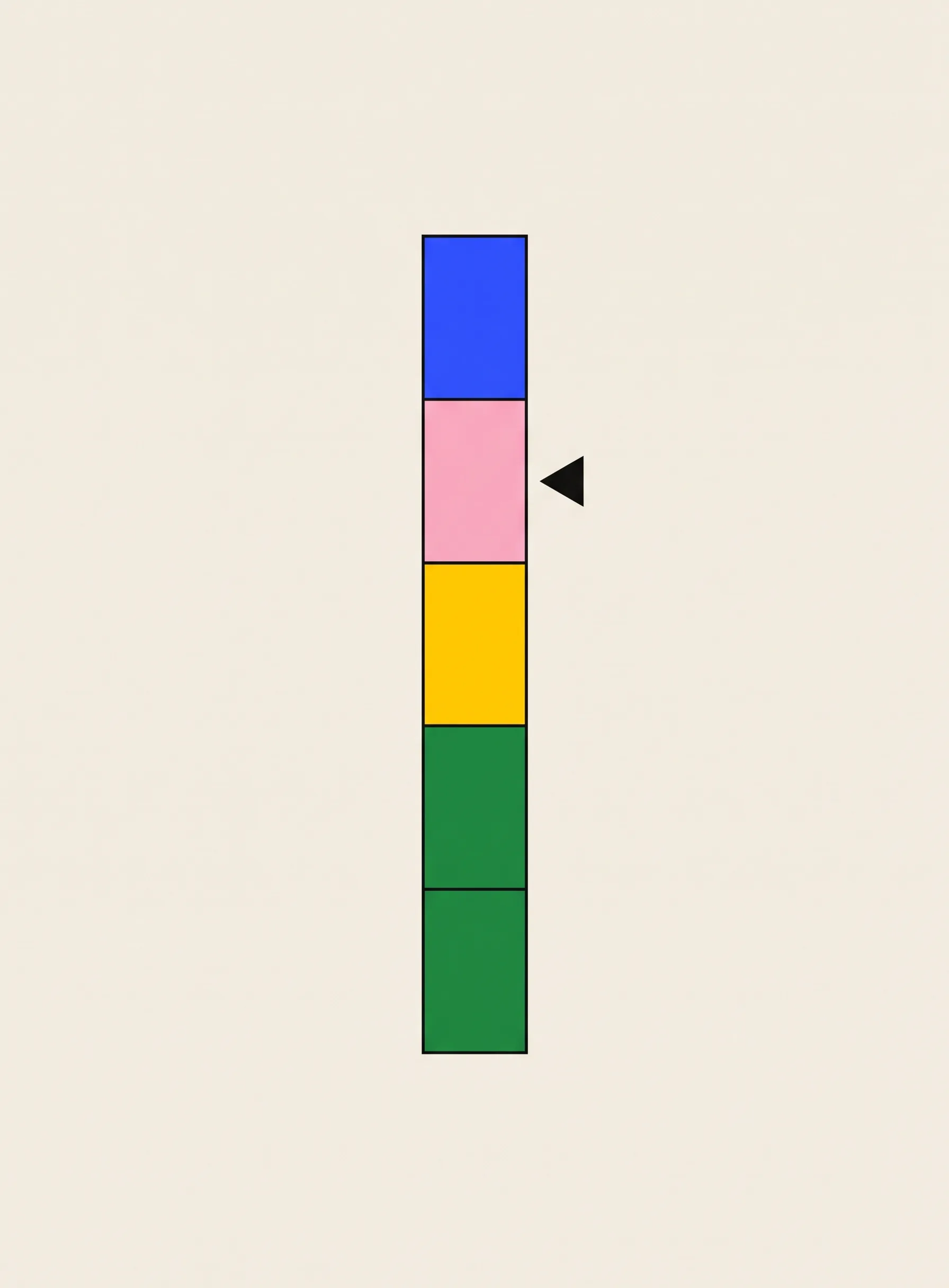
Learners tend to flatten everything into one category called “bad words.” Korean speakers hear at least four distinct bands, and the distance between the top and the bottom is enormous — much wider than in English, where most profanity clusters in the middle.
Band 1 — not swearing at all. These are exclamations that foreigners often mistake for profanity because of the force behind them. 아이고 (aigo) is closer to oh dear and is used constantly by older people. 헤 (heol) is whoa / no way. 대박 (daebak) means amazing. 째증나 (jjajeungna) means this is annoying and is entirely safe. You can use all of these freely.
Band 2 — mild, mostly fictional. 제기람 (jegiral) and 점장 (jenjang) translate as damn or dammit. Here is the useful detail: Koreans rarely say these in real life. They survive mainly in dubbing and subtitles as sanitised stand-ins for much stronger words, which means using them earnestly marks you as someone who learned Korean from translated media.
Band 3 — real profanity, contextually survivable. 미친 (michin, crazy) and the intensifier 존나 (jonna, functionally fucking as in fucking expensive) live here. Between close friends these pass without comment. Directed at anyone else they are clearly offensive.
Band 4 — the serious ones. 쥈발 (ssibal), 개새기 (gaesaekki) and their relatives. These are not casual. Aimed at a specific person they are understood as a real attack, and in Korea an insult delivered in public can carry actual legal consequences — defamation and insult are criminal matters there in a way they are not in most Western countries.
Where you get into trouble is assuming the bands are evenly spaced. They are not. The step from Band 3 to Band 4 is a cliff, not a stair.
The words you will actually hear, and what they mean
What follows is a recognition list. Each entry gives the literal meaning, the real-world force, and the specific trap attached to it.
- 쥈발 (ssibal) — the strongest general-purpose profanity in Korean, broadly parallel to the English f-word but carrying more heat. Used as a standalone shout of frustration it is aimed at the situation; attached to a person it is a direct attack. Often written online as ㅅㅂ or spelled 시발 to soften it in text. You will hear this one more than all the others combined.
- 개새기 (gaesaekki) — literally animal offspring, functionally son of a bitch. Always aimed at a person, always a genuine insult. There is no affectionate reading of this from a stranger.
- 병신 (byeongsin) — commonly translated idiot, which badly undersells it. The word originally referred to disabled people, and that origin is neither forgotten nor neutral. Korean disability advocates campaign against it directly. Recognise it; do not use it, even jokingly, even among friends.
- 지람 (jiral) — roughly bullshit or knock it off, most often in the set phrase 지람하다. Like 병신 it derives from a medical term, in this case for seizures, and carries the same problem.
- 미친닶 / 미친녕 (michinnom / michinnyeon) — crazy bastard / crazy bitch. Note the suffixes: 닶 marks a male target, 녕 a female one, and they are not symmetrical. 녕 lands considerably harder and is widely regarded as misogynistic, which is worth knowing before you conclude you have learned a matched pair.
- 존나 (jonna) — an intensifier derived from crude anatomical slang, used the way English uses fucking before an adjective. Very common in young men’s speech, vulgar in all other contexts. The cleaner intensifier is 진짜 (jinjja, really).
- 개- as a prefix — a genuinely interesting case. 개좋아 (really good), 개맥있다 (really tasty). This began as vulgar intensification and has drifted into ordinary young-person slang; it is now far milder than 존나 and you will see it in advertising. Still casual, still wrong in a job interview.
- 꼳져 (kkeojyeo) / 닥쳐 (dakchyeo) — get lost and shut up. Not profanity in the strict sense, but both are blunt commands in banmal, which is exactly the problem discussed in the next section.
One pattern worth extracting: several of the strongest words in Korean are built from medical or animal vocabulary rather than the sexual and religious roots English draws on. That is why direct translation consistently misleads — 병신 rendered as idiot looks like a playground word and is nothing of the kind.
Who you say it to matters more than what you say
Return to the speech-level system, because this is where learners actually cause damage — usually with words that were not even on the list above.
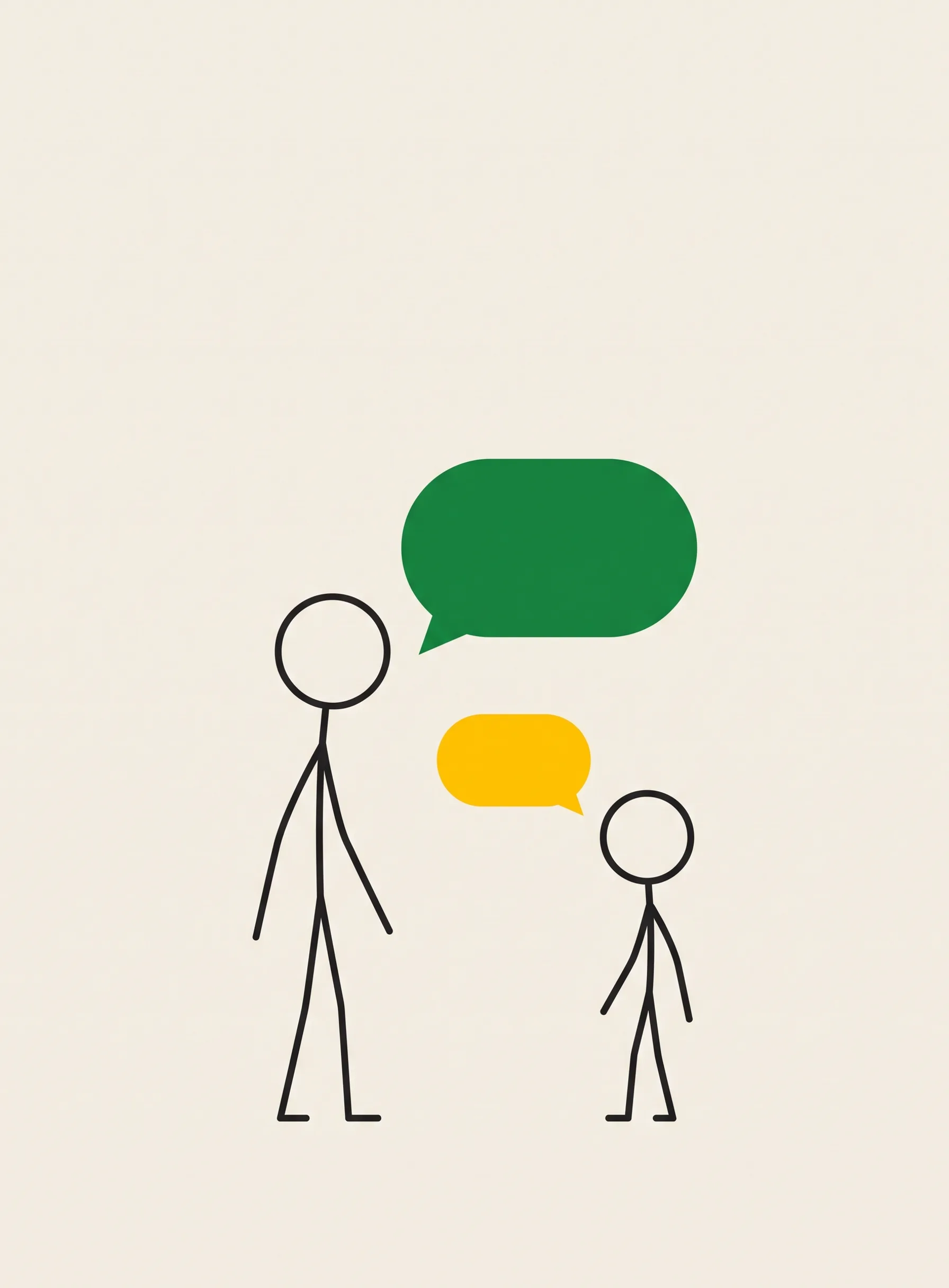
Imagine two sentences. In the first, you say 존나 비새 (ridiculously expensive) to a university friend your own age. Mildly crude, completely unremarkable. In the second, you say the same two words to a colleague who is six years older than you. You have now done two things at once: used vulgar language, and addressed a senior in banmal. The second offence is the larger one. You have effectively announced that their seniority does not register with you, and in a Korean workplace that is not a slip — it is a statement.
This is also why the affectionate swearing you see in films is so misleading. Two men insulting each other cheerfully in a drama are almost always 친구 — friends of the same age, usually since school. The profanity is a badge of that specific relationship, and it says we are past formality. Borrowing the register without the relationship does not make you sound close. It makes you sound as though you have mistaken them for someone else.
A few specific situations worth flagging:
- Age gaps of even one or two years are real. Korean tracks school-year cohorts closely, and the line is sharper than most learners expect.
- “Everyone swears at work” is a trap. Seniors swearing downward is common; it does not travel back up the hierarchy.
- The foreigner exemption is not what it looks like. People will forgive you, but forgiveness is the point — you are being excused, not understood as fluent.
- Online is its own country. Gaming voice chat and comment sections run far cruder than any face-to-face setting. Do not calibrate from them.
What K-drama subtitles are not telling you
Most learners build their sense of Korean profanity from subtitled media, and subtitled media is systematically misleading about it. This is not carelessness; it is the result of several industry constraints stacking in the same direction.
Subtitles are written to a rating. A show licensed for a broad audience cannot print the English word that would actually match 쥈발, so it prints damn, what the hell, or are you kidding me. Watch closely and you will notice the same Korean word rendered three different ways in one episode, always at whatever strength the scene can carry.
Subtitles have no room. Two lines, a reading-speed limit, and a great deal of plot to convey. Profanity is the first thing dropped, because it carries emotion rather than information. Entire expletives vanish without the sentence losing meaning.
Korean broadcast censors the audio itself. On variety shows and network dramas you will hear a beep, or see a graphic placed over the speaker’s mouth, or catch the audio dipping to silence. Learners often read this as the show being playful. It is a regulator requirement, and it means you have no way to judge strength from how the broadcast treats it — mid-strength and severe words get identical bleeps.
Written Korean censors itself too. Online you will constantly see ㅅㅂ, ㅁㅊ, ㄴㄳ — the bare initial consonants of a word, stripped of vowels. Korean readers reconstruct these instantly. Learners see a meaningless consonant cluster and skip past it, which is how people end up several hundred hours into Korean media without registering how often the strong words are actually being used.
The correction is simple to state: assume the Korean you are hearing is at least one full band stronger than the English you are reading, and considerably stronger if the reaction on screen seems disproportionate. That reaction is the honest signal. The subtitle is a negotiated one.

What to say instead, and how to hear the difference for yourself
Nearly every moment that tempts a learner into profanity is really a moment of surprise, frustration or disbelief — and Korean has excellent, completely safe vocabulary for all three. Most native speakers reach for these far more often than for anything on the list above.
- Surprise: 헤 (heol) — whoa. 말도 안 됒 (maldo an dwae) — no way. 진짜? (jinjja?) — seriously?
- Frustration: 아 진짜 (a jinjja) — the all-purpose sigh, closest to oh, come on. 미치겠다 (michigetda) — this is driving me crazy, aimed at the situation and perfectly acceptable. 째증나 (jjajeungna) — this is irritating.
- Disbelief: 어이없네 (eoieopne) — this is absurd, a genuinely useful and very common expression that carries real exasperation with zero risk.
- Admiration: 대박 (daebak) — amazing, for the moments where English would reach for something stronger.
아 진짜 and 어이없네 between them will cover most of what you actually need. They sound natural, they cost you nothing, and they work with anyone.
As for calibration — the honest answer is that no article can give it to you. Strength in Korean lives in the relationship and the room, and those are things you can only learn by being in conversations and noticing how people react. A single flicker of a native speaker’s expression will teach you more about where a word sits than any severity chart, including the one above. That is also the safest way to learn this material: ask rather than experiment. Asking a native speaker what a word means and where it lands costs nothing, whereas testing it on someone costs a great deal. CoffeeTalk pairs you with native speakers for short conversations, which makes it easy to ask the awkward question once and get a real answer instead of guessing from a drama.
If you would rather spend your Korean on things you can actually use, Korean honorifics covers the speech-level system all of this rests on, and how to say hello in Korean is a better place to start a conversation than anything here.
Knowing these words is genuinely worth it — you will understand what is happening in a scene, catch the moment a character crosses a line, and stop being the person laughing one beat late. Saying them is a different skill entirely, and it is one that almost no learner needs.
FAQ
What is the most common Korean swear word?
쥈발 (ssibal) by a wide margin. It works both as a standalone shout of frustration directed at a situation and as a direct insult aimed at a person, and the second use is far stronger than the first. It is roughly parallel to the English f-word but carries more heat, and subtitles almost never translate it at full strength.
Is it ever acceptable for a foreigner to swear in Korean?
Between genuinely close friends of the same age, mild profanity can pass, but it is earned by the relationship rather than by fluency. The common hope that swearing will make you sound native usually backfires: people hear someone who has misjudged the room. Recognising the words is valuable; using them rarely is.
Why do Korean subtitles translate swear words so weakly?
Three reasons stack up. Subtitles are written to a content rating, so the strongest English equivalents are off-limits. They are also constrained by line length and reading speed, and profanity is the first thing cut because it carries emotion rather than plot. On top of that, Korean broadcast regulations require the audio itself to be bleeped or covered.
What does the 개 prefix mean in Korean slang?
개- literally means dog and began as vulgar intensification, but it has drifted into ordinary young-person slang: 개좋아 means really good, 개맥있다 means really tasty. It is now much milder than the intensifier 존나 and even appears in advertising, though it is still casual speech and out of place in any formal setting.
Which Korean insults should I avoid completely?
병신 and 지람 both derive from terms for disability and illness, and that origin is still live enough that advocacy groups campaign against them. 녕, the female-target suffix in words like 미친녕, lands considerably harder than its male counterpart and is widely considered misogynistic. None of these are safe to use jokingly.