
Korean culture
Sunbae Meaning: What 선배 Says About You and Everyone Else in the Room
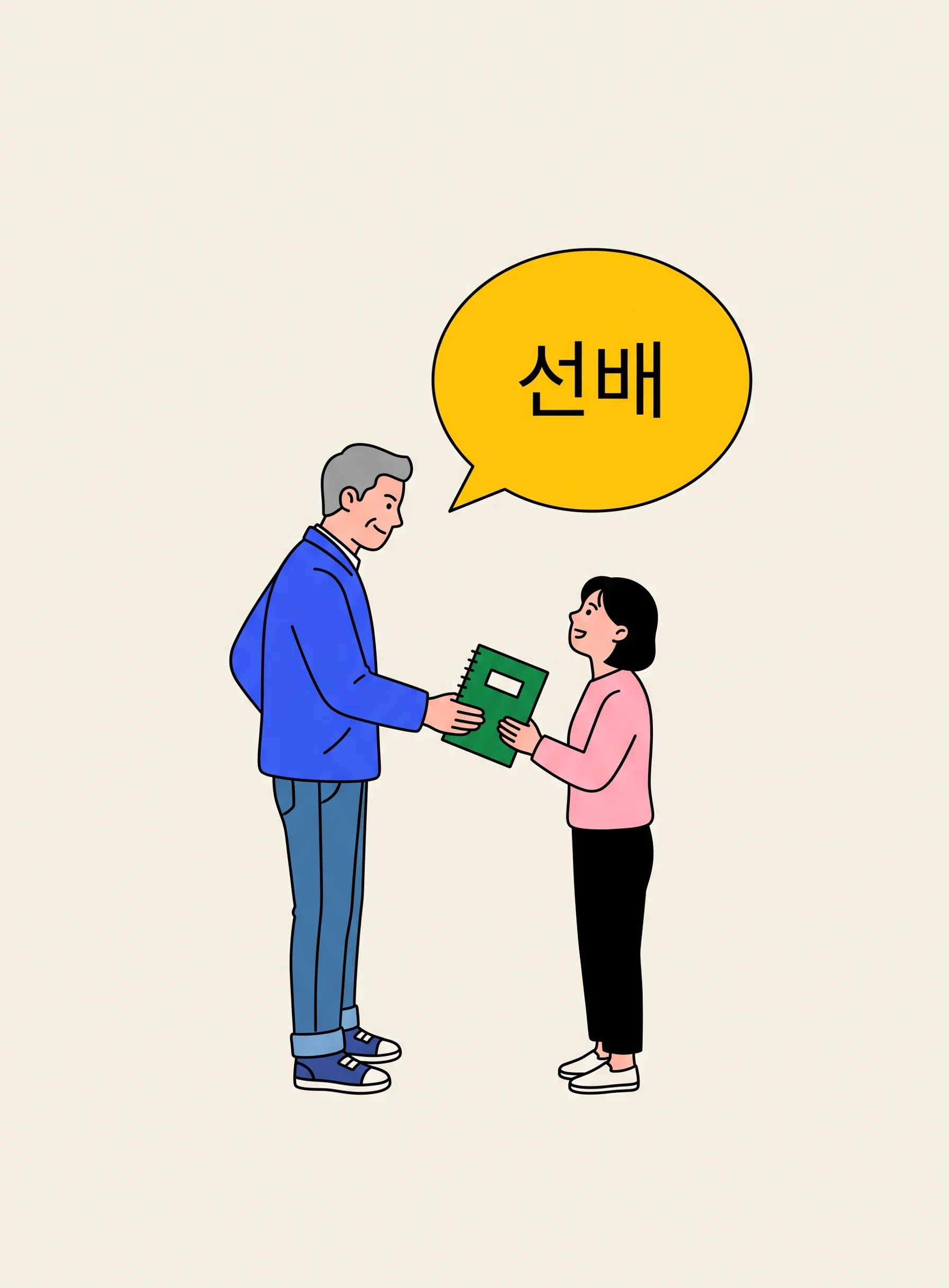
Walk into a Korean university club room, a first day at a Korean company, or episode one of almost any campus drama, and within a minute someone will be called sunbae. The subtitles will render it as a name, or as ‘senior’, and both are wrong in different ways. The sunbae meaning is narrower and more useful than either: 선배 is the person who started before you did, and that fact alone reorganises how you speak to them.
선배 (sunbae) and its mirror 후배 (hoobae) are the words Korean uses for the relationship that has nothing to do with family and nothing, strictly, to do with age. They cover school, university, work, the military, a climbing club and an online game guild equally well. This guide covers what the word actually means, why the year matters more than the birthday, where it applies, how to address someone with it without sounding like a subtitle, and the mistakes that give learners away.
The sunbae meaning in one sentence
선배 (sunbae) is someone who entered the same institution before you did. Same school, same university department, same company, same unit, same club — and they got there first. You are their 후배 (hoobae), the one who came later. That is the whole definition, and everything else follows from it.
The pair is symmetrical and permanent. Once someone is your sunbae, they stay your sunbae; graduating does not reset it, and neither does changing jobs. Koreans in their forties still introduce a former university classmate as ‘my sunbae’ twenty years after either of them set foot on campus. The word records a fact about the past, not a current job title.
- 선배 (sunbae) — the earlier one. Sometimes romanised seonbae, which is the official spelling; sunbae is what fan communities and subtitles use.
- 후배 (hoobae) — the later one. Also written hubae.
- 동기 (donggi) — neither. Someone who started the same year as you. Equals, and often the closest friendships in a Korean workplace.
If the word looks familiar to anime viewers, it should: 선배 and Japanese senpai come from the same two Chinese characters, 先輩, meaning roughly ‘the generation ahead’. The systems work similarly, but the words are not interchangeable in speech. Saying ‘senpai’ to a Korean gets you a laugh, not a reply.

It is the year you started, not the year you were born
This is the part that surprises learners, and it is worth stating bluntly: a sunbae can be younger than you. Someone who entered university at eighteen is the sunbae of someone who entered at twenty-two after military service or a failed exam year. Age loses. Entry year wins.
Korean universities make this explicit with the 학번 (hakbeon), the cohort number tied to the year you matriculated. A student who says ‘I’m 24학번’ has told the room exactly where they sit relative to everyone else, permanently. Companies do the same thing with 입사 연도, the year you joined, and the military does it with the month of enlistment, counted with a precision that outsiders find alarming.
So Korean has two parallel hierarchies running at once, and they use different words:
- Age hierarchy → the family words. 형, 누나, 오빠, 언니. Personal, warm, tied to birth year, and gendered on both sides.
- Seniority hierarchy → 선배 and 후배. Institutional, tied to entry year, and completely gender-neutral.
That last point is the practical advantage of 선배. You do not need to know the speaker’s gender or the listener’s gender to use it, which makes it the safest word in the entire address system. A woman says 선배 to an older man; a man says 선배 to an older woman; nobody blinks. Compare that with the four-way grid you have to navigate for noona and hyung, where picking wrong marks you instantly.
The two hierarchies also coexist happily. The same person can be your 선배 at work and your 누나 at dinner, and Koreans switch between the words depending on which relationship is doing the talking. In the office she is 선배님; at the company outing three drinks in, she may become 누나. The switch is the point, and everyone notices it.
Where sunbae applies: school, work, the army, your hobby
The word travels further than most learners expect, and the flavour changes with the setting.
- School and university. The classic case. In middle and high school the gap is one or two years and feels enormous; at university it organises the club rooms, the orientation trips and who buys the first round. A 과 선배 is a senior in your own department, and that is the strongest version of the bond.
- Work. Used constantly, but usually alongside a job title. 선배님 is the warm option; 대리님 or 과장님 — the rank plus 님 — is the formal default. Many newer Korean companies have deliberately flattened this by calling everyone 님, which is itself a statement about hierarchy.
- The military. Conscription produces the most rigid version of all, though the specific words shift: 선임 (seonim) and 후임 (huim) do the work of sunbae and hoobae inside a unit, counted by enlistment month.
- A trade or profession. An actor with ten more years of work is a 선배님 to a newcomer even if they have never shared a set. In Korean entertainment this is said out loud, constantly, in interviews and award speeches.
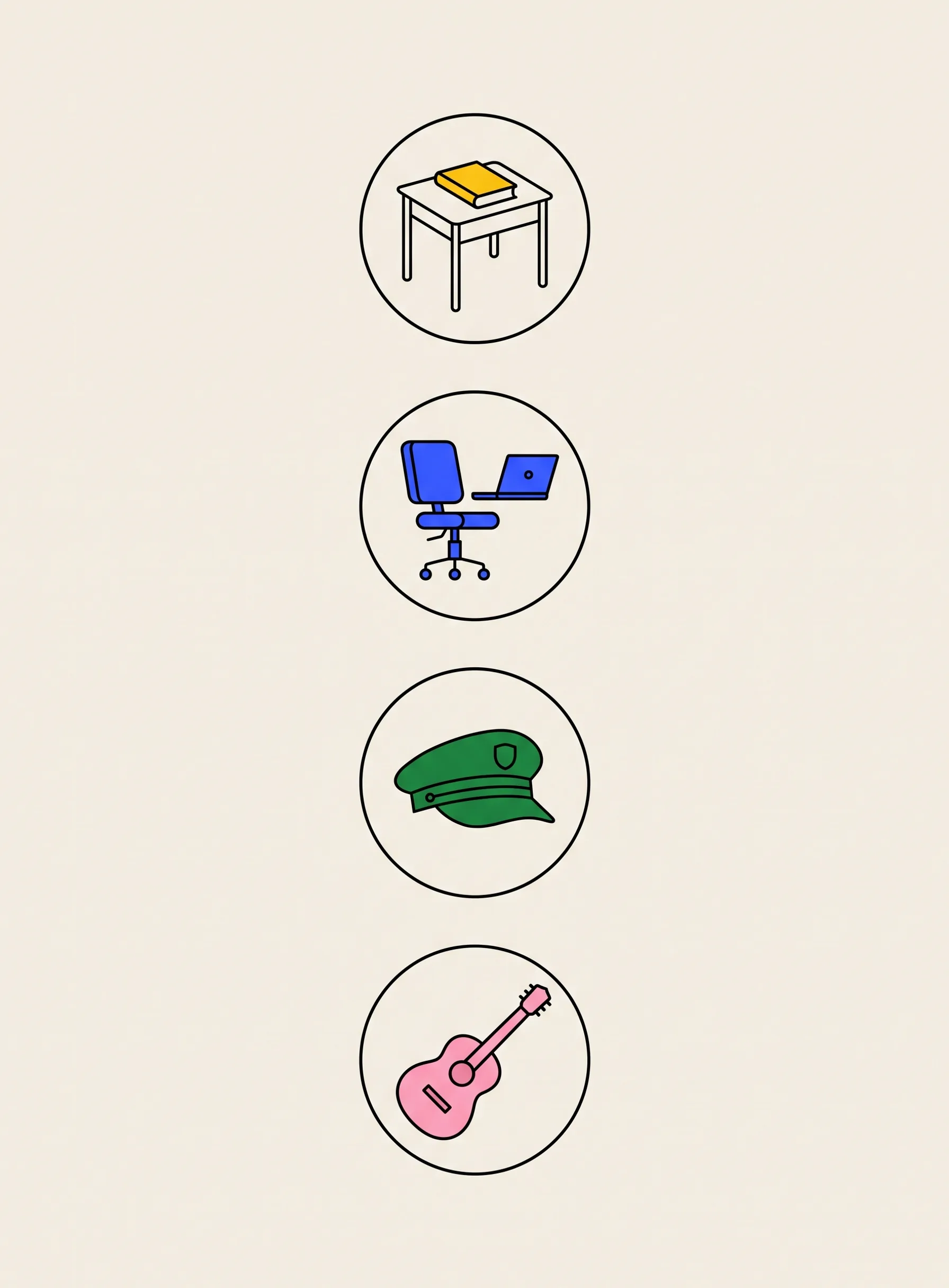
- Hobbies and games. A climbing gym, a band, a guild. Anywhere with a joining date, the word fits, usually with a lighter and more joking tone.
One workplace pair worth knowing separately: 사수 (sasu) and 부사수 (busasu), originally a gunner and their assistant, now the person who trains you and the person being trained. Your 사수 is a specific sunbae with an actual responsibility for you — closer to ‘mentor’ than ‘senior’, and complaining about your 사수 is a national pastime.
How to actually address a sunbae
Unlike 형 or 누나, 선배 is usable on day one. You do not need closeness, permission or a shared meal first — you need only the fact that they started earlier. That makes it the word to reach for when you have just arrived somewhere and have no idea what to call anybody.
The forms, roughly from formal to casual:
- 선배님 (sunbaenim). With the honorific 님. Correct in a workplace, correct with someone much more senior, correct when you have just met. If you are unsure, use this one; nobody has ever been offended by an extra 님.
- 이름 + 선배. 지훈 선배 (Jihoon sunbae). First name, then the word. Standard once you know each other, and the way you distinguish between several sunbae in the room.
- 선배 on its own. 선배, 이거 어떻게 해요? (‘Sunbae, how do I do this?’). Common and friendly. Like the family words, it stands in for ‘you’, which Korean avoids saying directly.
- Job title + 님. In a company this often outranks 선배 entirely. 팀장님, 과장님, 대리님.
A hoobae, meanwhile, gets called by name. There is no word you say to a junior’s face; 후배 is used to describe them to somebody else, exactly the way 동생 works with the family words. The asymmetry is the relationship: she says his name, he says 선배.
The verb endings follow along. A hoobae uses 존댓말 — polite speech — with a sunbae, at least until the sunbae says 말 놔 (‘drop the formality’). The sunbae speaks casually back from the start, and that imbalance is normal rather than rude. Even after 말 놔, most people keep the word 선배 itself. Dropping the polite endings and keeping the title is the most common settled state between a sunbae and a hoobae who like each other.
Sunbae in K-dramas, and why she never says his name
Campus and workplace romances lean on this word hard, and once you know what it is doing, those scenes read completely differently.
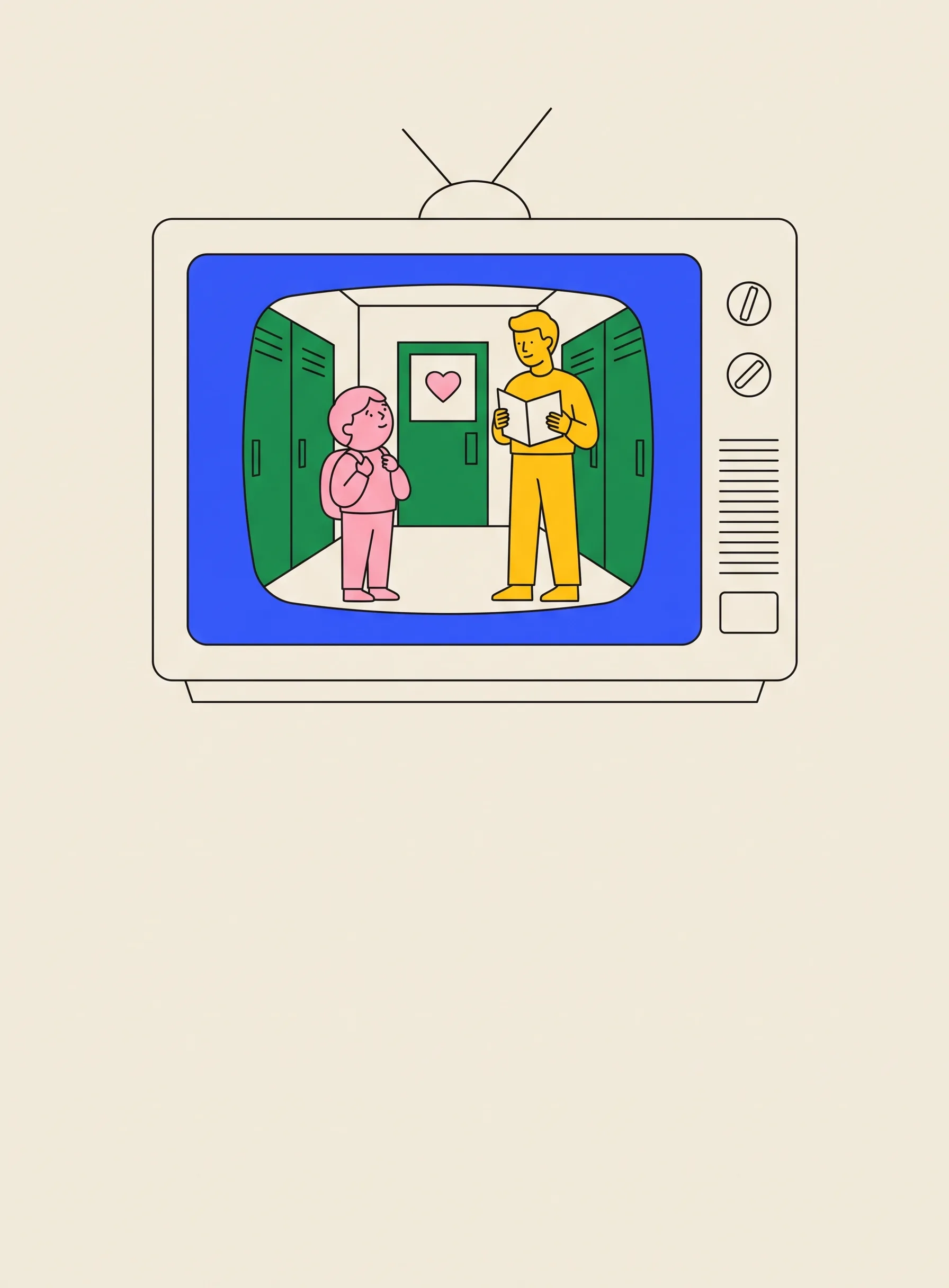
The setup is familiar: the female lead calls the male lead sunbae for eleven episodes. Not his name — 선배. Every single time. English subtitles usually substitute his name, which quietly deletes the entire tension, because in Korean the word is doing two jobs at once. It says ‘I respect the distance between us’ and, because she keeps saying it long after they are close, it says ‘I am refusing to close that distance first’.
Then, somewhere late in the run, she stops. She uses his name, or switches to 오빠, and a Korean audience reacts to that single word the way an English-speaking audience reacts to a kiss. The institutional word has been traded for a personal one. In dramas built the other way round, the male lead is the hoobae and the pleasure is watching him keep saying 선배님 with steadily less formality behind it.
Workplace dramas use the same lever without the romance. Misaeng is essentially two hours of television about what a 사수 owes a 부사수 and what a 선배 owes a 후배 when the company is not interested in either. Watch for who speaks casually to whom in any office scene; the hierarchy is laid out in the verb endings before anyone explains it.
If you are studying with dramas, this is the one word worth listening for under the subtitles. Count how many times the lead says 선배 in an episode, and notice the episode where the count drops to zero.
Mistakes non-Koreans make with sunbae
The word is easy to use and easy to misplace. These are the errors that come up over and over.
- Treating it as a synonym for ‘older’. The most common mistake by far. A Korean five years older than you whom you met at a party is not your sunbae — you share no institution. He is 형 or 오빠, or he is 저기요 until you know him better.
- Saying it to a stranger. 선배 requires a shared school, company or club. Without one, the word has nothing to attach to.
- Assuming a sunbae is always older. They frequently are not, especially at university after military service. Do not switch to 반말 with a sunbae just because you were born earlier. Entry year outranks birth year here.
- Dropping 님 too early. In a workplace, 선배 on its own to someone you met yesterday is a little bold. Start at 선배님 and let them tell you to relax.
- Putting the word before the name. 지훈 선배, never 선배 지훈. Korean address words always follow the name, like 님 and 씨.
- Calling someone your hoobae to their face. 후배 is a descriptive word, not a form of address. Use their name.
- Using ‘senpai’. Same characters, different language. In Korean it is 선배, pronounced sun-beh with a short first vowel.
- Expecting the hierarchy to be hostile. Learners often read the whole system as oppressive. In practice most sunbae feel responsible for their hoobae: they answer the questions nobody else will answer, and they pay for lunch. The obligation runs both ways, and the payment direction is the clearest proof of it.
How to start using sunbae for real
The grammar of this word takes about four minutes to learn. What takes longer is the reflex — walking into a room and instinctively working out who arrived before you did, which is something Koreans do automatically and learners do not do at all.
Three things that build it faster:
- Ask the right question. Not ‘how old are you?’ but 몇 학번이세요? (‘which cohort are you?’) at a university, or 언제 입사하셨어요? (‘when did you join?’) at a company. Those are the questions that actually decide the word.
- Default to 선배님 when you are new. It is the one address word that works before you know anybody’s age, gender relationship or rank. Treat it as your safe option and adjust downward later.
- Listen for the endings, not the nouns. In any Korean group conversation, the person speaking casually to someone who answers politely is the sunbae. You can map an entire room this way without anyone stating it.
Then say it to someone. Address words only become real when a real person answers to them, and the gap between recognising 선배 in a subtitle and producing it at the right moment is bigger than it looks. CoffeeTalk pairs you with native Korean speakers for short conversations, and the cohort question tends to surface early — ask a Korean student which 학번 they are and you will get a five-minute explanation of the whole system from someone who lives inside it. Choosing topics around university or work makes the word appear on its own.
If you are assembling the rest of the address system, oppa, hyung and noona cover the age half of it, and Korean greetings follow the same politeness logic that decides between 선배 and 선배님.

FAQ
What does sunbae mean in Korean?
선배 (sunbae) means someone who entered the same school, university, company or organisation before you did. You are their 후배 (hoobae). It is about entry year rather than age, and it is used for people of any gender.
Is sunbae the same as senpai?
They come from the same Chinese characters, 先輩, and the social systems are similar, but they are words in different languages. In Korean the word is 선배, pronounced sun-beh. Saying senpai to a Korean will be understood as a joke, not as Korean.
Can a sunbae be younger than you?
Yes, and it happens often. Someone who started university straight from school is the sunbae of a classmate who enrolled later after military service or an extra exam year. Entry year decides the relationship, not birth year.
What is the difference between sunbae and hyung or oppa?
형 and 오빠 are age words: personal, warm, and they depend on the gender of both speakers. 선배 is institutional and gender-neutral, and it depends only on who joined first. The same person can be your sunbae at work and your hyung outside it.
Do I say sunbae or sunbaenim?
선배님 with the honorific 님 is the safer choice when you have just met someone, at work, or with anyone considerably more senior. 선배 on its own is friendly and normal once you know each other, often paired with their first name as in 지훈 선배.