
Korean culture
Noona Meaning: What 누나 Really Means and Why K-Dramas Love It
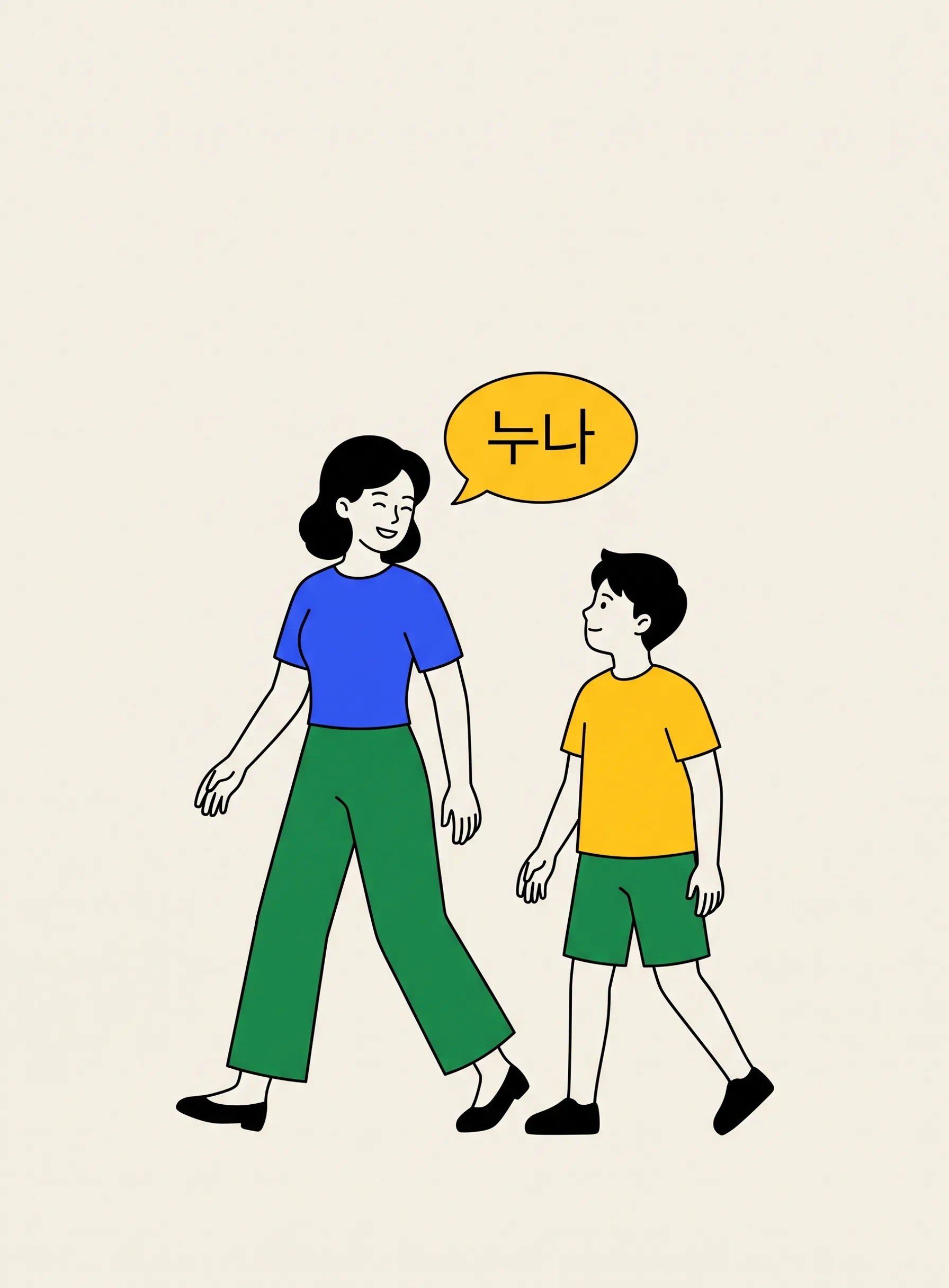
Somewhere in the first episode of almost any K-drama, a man calls a woman noona, and the subtitles quietly replace it with her name. That single swap hides a lot. The noona meaning in a dictionary is ‘older sister’, but the word tells you the speaker is male, the woman is older, and the two of them are close enough for the age gap to be said out loud rather than hidden behind a title.
누나 (noona) is one of four Korean sibling words that double as everyday forms of address, and it is the one used by men, to women who are older. It is also the word behind an entire genre of romance, a running joke in K-pop interviews, and a mistake that female fans make constantly. This guide covers what the word really means, who is allowed to use it, how it differs from unnie and oppa, and how it actually sounds when a Korean speaker says it.
The noona meaning in one sentence
누나 (noona) means ‘older sister’, and it is what a male speaker calls an older female — his actual sister, or an older woman he is close to. Every part of that sentence is a rule Koreans apply without thinking:
- The speaker is male. A woman calling an older woman 누나 sounds wrong; her word is 언니 (unnie).
- The person addressed is female. An older man gets 형 (hyung) from a male speaker.
- The person addressed is older — usually by one to ten years. Beyond that, the word starts to feel like flattery or a joke, and an older woman becomes 아주머니 / 이모 (roughly ‘ma’am’ or ‘auntie’) or a job title instead.
Blood is not part of the definition. Korean uses the same word for a sister by birth and for an older female friend, and adds 친누나 (chin-noona, ‘real older sister’) only when the difference matters. If a Korean man says ‘my noona’ in English, you genuinely cannot tell whether he means family or a friend until you ask.
Pronunciation is easier than most Korean words. Two syllables, nu-na, with the first vowel like the ‘oo’ in food and equal stress on both. You will see it romanised as noona and nuna; they are the same word, and nuna is closer to the official spelling system. The double ‘o’ is simply how the word spread through fan communities, where it stuck.
Noona, unnie, oppa, hyung: the grid you need
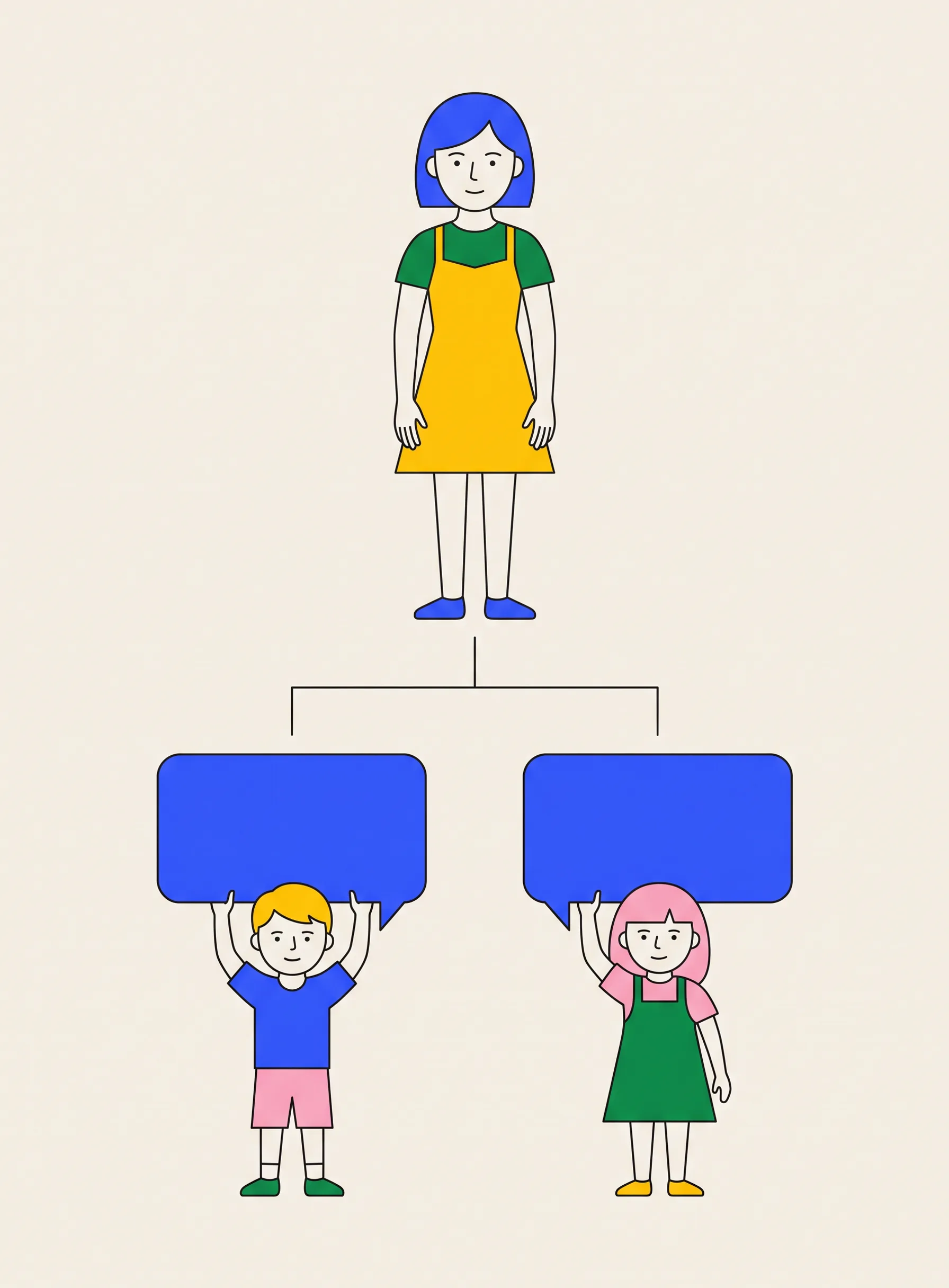
Korean sibling words form a two-by-two grid, and the axes are the gender of the speaker and the gender of the older person. Once the grid is in your head, all four words stop being confusing:
- Man speaking to an older woman → 누나 (noona)
- Woman speaking to an older woman → 언니 (unnie)
- Woman speaking to an older man → 오빠 (oppa)
- Man speaking to an older man → 형 (hyung)
Two of those words belong to you and two do not. If you are a man, your pair is 누나 and 형; if you are a woman, your pair is 언니 and 오빠. You will hear the other pair constantly, but you will almost never say it, and that is the single most useful thing to remember about the whole set.
There is no word for a younger sibling that you say to their face. 동생 (dongsaeng) exists, but it is used to talk about younger people, not to address them. A younger person simply gets called by name, and in return is expected to use one of the four words above. This is why 누나 carries weight: it is half of a two-way arrangement. She calls him by his name; he calls her 누나. The asymmetry is the relationship.
The words also pull the rest of the sentence with them. A man who calls someone 누나 will usually speak to her in polite or gently softened language, at least at first, while she is free to talk to him casually. The word and the verb endings move together, which is the same logic that decides which Korean greeting you use with whom.
How noona is used in real sentences
Like the other sibling words, 누나 rarely stands alone for long. It attaches to names, takes on suffixes, and lives inside a few fixed phrases. The forms you will meet most often:
- Name + 누나. 지은 누나 (Jieun noona) — the standard way to address or refer to a specific older female friend. It is always the first name, never the surname, and the relationship word always comes second.
- 누나 on its own. Speaking directly to her: 누나, 밥 먹었어? (‘Noona, have you eaten?’). Korean drops pronouns freely, so 누나 often does the job that ‘you’ would do in English.
- 우리 누나 (uri noona). Literally ‘our older sister’, meaning ‘my older sister’. Koreans say uri for family even when they are an only child talking alone; ‘my’ would sound oddly possessive.
- 큰누나 / 작은누나. ‘Big noona’ and ‘small noona’ — the eldest and second-eldest older sister when a man has more than one.
- 누님 (nunim). 누나 with the honorific 님. Formal and slightly old-fashioned; used for a much older woman in a hierarchical setting, for a wife’s older sister in some families, and for comic effect when a man wants to sound extra respectful.
Sentences worth knowing by ear:
- 누나, 이거 뭐야? — ‘Noona, what is this?’
- 누나가 살게. — ‘Noona will pay.’ The older person paying is normal, not generous.
- 누나 말 들어. — ‘Listen to your noona.’ Half affectionate, half an instruction.
- 누나 믿지? — ‘You trust your noona, right?’ A drama line that appears in every genre.
Notice the last three: a Korean woman will happily use 누나 about herself when talking to a younger man. It is not grand or strange. The relationship word is simply standing in for ‘I’, the same way an English-speaking parent might say ‘Mum’s got it’ to a child.
Noona romance: why K-dramas keep coming back to it
If you search the word online, half the results are about a genre rather than a definition. 누나 로맨스 (noona romance) is a drama in which the female lead is older than the male lead, usually by somewhere between three and ten years, and the word 누나 does a lot of the emotional work. Something in the Rain, One Spring Night, Encounter and Nevertheless all live in this space, and the hook is always the same: she is used to being called 누나, and the story is about the moment that word stops fitting.
The reason it works as drama is that 누나 is not a neutral word. It contains an age gap, it contains closeness, and in Korean culture it contains a faint reminder that an older woman dating a younger man was, until fairly recently, unusual. So writers use the word as a dial. In early episodes the male lead says 누나 cheerfully and it means ‘friend’. Somewhere around the midpoint he says it more quietly and it means something else. And in the confession scene he stops saying it altogether and switches to her name, which in Korean is a far bigger step than it sounds in English.
Fans have a whole vocabulary around this. A 연하남 (yeonha-nam) is a younger man in a relationship; a 연상녀 (yeonsang-nyeo) is the older woman. ‘Noona, don’t call me a kid’ is a line so common it is practically a genre marker. If you are watching with subtitles, listen for the Korean audio at these moments, because the translation will usually give you a name where the actor is very deliberately saying — or not saying — 누나.

Noona in K-pop and fan culture
K-pop is where most non-Koreans first meet the word, and it appears there in two different ways.
Inside groups, 누나 is used exactly as it is in any Korean friendship. A male idol will call the older women around him — staff, managers, stylists, senior artists — 누나, and a younger member of a mixed-age group will use it for the older girls. In interviews you will hear a maknae describe a female senior as 누나 with obvious respect, because within the industry the age hierarchy is real, and the youngest member uses these words for nearly everyone.
Between idols and fans, the word turns into a running joke. Male idols often have a large fanbase of women who are older than they are, and those fans are, affectionately, noona fans (누나 팬). An idol saying ‘누나들, 사랑해요’ (‘Noonas, I love you’) at a concert is a guaranteed scream. It is playful, it acknowledges the age gap directly, and it is also perfectly correct Korean: he is a man addressing older women he is fond of. Korean fans will sometimes hold signs saying 누나가 지켜줄게 (‘Noona will protect you’), which is the drama line turned into fan culture.
The mirror image exists too. Female idols get called 누나 by younger male fans, and an older fan of a girl group is never called an oppa fan for reasons that would take a separate article, but the pattern is the same: the word is used precisely because it names the age gap instead of pretending it isn’t there.
One thing to notice if you follow international fandom: the word only works in the mouth of a male speaker. When female fans write ‘noona’ about themselves in English (‘I’m a noona fan’), that is fine, because they are describing how the idol would refer to them. The mistake is when they use it as a form of address for another woman, which is the next section.

Mistakes non-Koreans make with noona
The word is short, so the mistakes are all about who says it, to whom, and when. These are the ones Korean speakers notice instantly.
- Women using noona. The most common error by a wide margin, and it comes straight from fandom. A woman addressing an older woman says 언니 (unnie), always. Saying 누나 marks you as a man or as someone who learned the word from a male idol, and Koreans will gently correct it.
- Using it for a stranger. A woman working at a shop, a cafe or a counter is not your 누나. Get her attention with 저기요 (‘excuse me’) or 사장님 (‘boss’) if she runs the place. 누나 assumes a relationship that does not exist yet.
- Using it for a woman who is much older. A twenty-year-old calling a fifty-year-old 누나 sounds like flattery, and not the good kind. Past a decade or so the word gives way to 이모 (‘auntie’, common in restaurants), 아주머니, or a title.
- Using it for a younger or same-age woman. 누나 points upward in age. Same birth year means 친구 (chingu, friends and equals), even if she is ten months older, which is why Koreans ask your birth year so quickly. The Korean age system is what makes that question meaningful.
- Putting it before the name. 지은 누나, never 누나 지은. The relationship word follows the name, exactly like 님 and 씨.
- Skipping straight to it. Meeting a Korean woman two years older does not make her 누나 on day one. In a class or company she is 선배 (sunbae) or a job title first. 누나 arrives when you are close, and often only after she says 누나라고 불러 (‘call me noona’). If you are unsure, ask: 누나라고 불러도 돼요? Nobody minds the question.
- Translating it as ‘sis’. English ‘sis’ is casual and optional; you can drop it and nothing changes. 누나 is affectionate but hierarchical, and once the relationship exists, leaving it out reads as either very distant or slightly rude.
How to actually start using noona
Words of address cannot be learned from a list, because the whole point of them is the relationship. You can memorise the grid in five minutes and still freeze the first time a Korean woman a little older than you says ‘just call me noona’. The only way past that is to say it to a real person and notice that nothing goes wrong.
Three things that help:
- Learn your own pair first. Men drill 누나 and 형; women drill 언니 and 오빠. Recognise the other pair by ear, but do not practise saying it, because you never will.
- Listen for it in unsubtitled clips. Variety shows and idol vlogs are ideal: the hierarchy is stated out loud, and you can hear who calls whom 누나 and how their sentence endings change to match.
- Get used to asking about age. 몇 년생이에요? (‘What year were you born?’) is not rude in Korean; it is the question that unlocks which word you will use for the rest of the friendship.
Then use it with someone. A conversation partner who is Korean and a little older than you is the fastest way to find out whether 누나 or 형 comes out naturally, and to be corrected gently if you reach for the wrong one. CoffeeTalk pairs you with native Korean speakers for short conversations, and the birth-year question tends to come up in the first two minutes whether you plan it or not. Picking topics around family and friends makes the sibling words appear even sooner.
If you are collecting the rest of the set, oppa and hyung are the other two words every K-drama viewer needs, and the ways to say thank you in Korean follow the same politeness logic that decides between 누나 and 누님.

FAQ
What does noona mean in Korean?
누나 (noona) means older sister. A male speaker uses it to address or refer to an older female — a real sister or a close older female friend. Women use a different word, 언니 (unnie), for the same relationship.
Can a girl call someone noona?
Not normally. 누나 is reserved for male speakers. A woman calls an older woman 언니 (unnie) and an older man 오빠 (oppa). A woman saying 누나 is heard as a mistake picked up from K-pop.
What is the difference between noona and unnie?
Both mean older sister and both are used for real sisters and close older female friends. The difference is the speaker: men say 누나 (noona), women say 언니 (unnie). The older woman being addressed is the same in both cases.
What is a noona romance?
A K-drama or film in which the female lead is older than the male lead, typically by three to ten years. The word 누나 carries the tension: the story is usually about the moment he stops calling her noona and starts using her name. Something in the Rain and One Spring Night are well-known examples.
Is it noona or nuna?
They are the same word, 누나. Nuna follows the official romanisation more closely; noona is the spelling that spread through fan communities and is far more common online. Both are pronounced nu-na, with the first vowel like the oo in food.